How to Start a Solar Business: A Step-by-Step Guide for New Installation Companies
By PVFirms Editorial Team, Published on 2026-10-24 • 7 min read
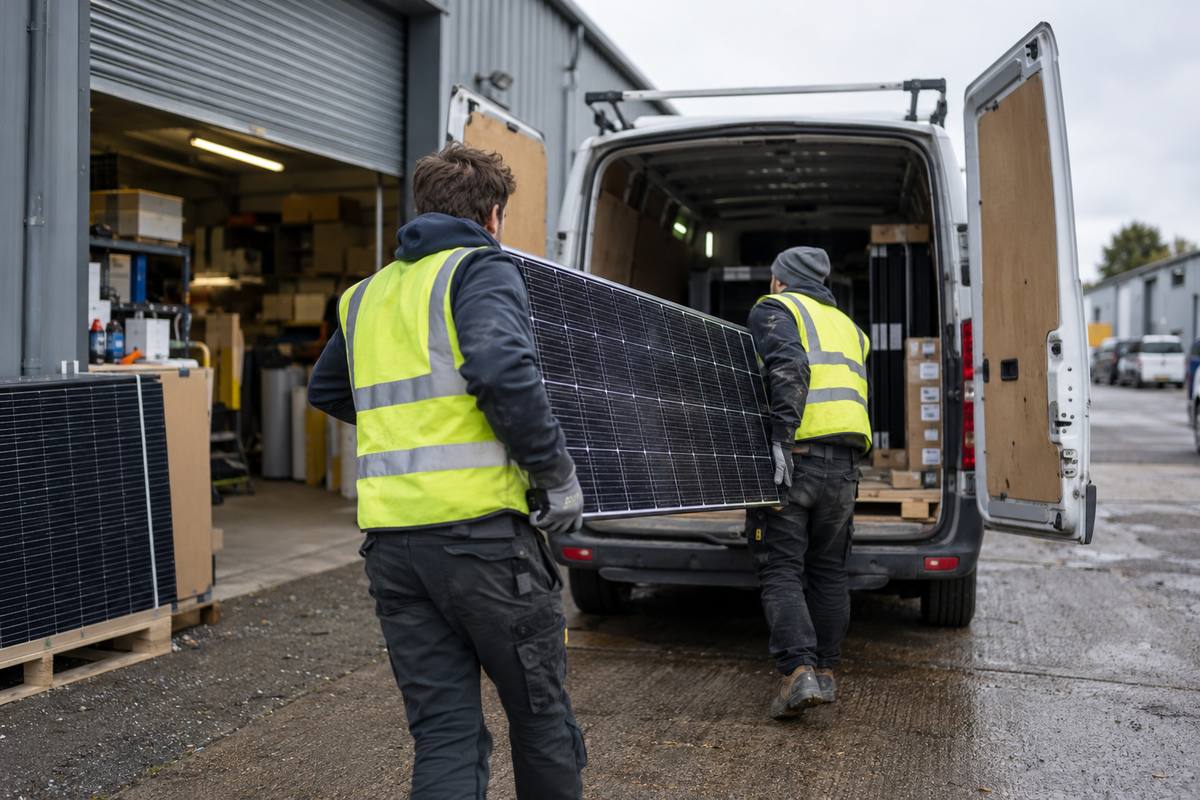
Working out how to start a solar business comes down to seven decisions: which market you serve, which certifications you hold, how you are insured, who supplies you, how you fund the gap between buying kit and getting paid, how you win the first jobs and how customers find you afterwards. Get those right and the technical work becomes the easy part.
This guide walks through each step for anyone planning to start a solar installation company, whether you are an electrician adding solar, a roofer branching out or a new team entering the trade.
In short:
- Pick a narrow first market, such as residential retrofits in one region, before expanding into commercial work.
- Certification is market-specific: MCS in the UK, state licensing plus optional NABCEP in the US, national schemes across the EU.
- Working capital, not equipment, is usually the biggest financial hurdle in year one.
- Early jobs often come from subcontracting, trade partnerships and accurate directory listings.
Step 1: Choose your market and niche
"Solar" covers very different businesses. Decide which one you are building first:
- Residential retrofits: high volume, short projects, strong reliance on reviews and referrals.
- Battery and EV charger add-ons for homes that already have panels: a fast-growing service line in many markets.
- Commercial rooftops: larger tickets, longer sales cycles and more design and grid paperwork.
- Subcontracting for larger installers or EPCs: lower margin but steady work and a track record.
- Operations and maintenance: recurring revenue from cleaning, inspections and repairs.
Check local demand before committing. Talk to distributors and established installers in your area about lead times and the work they turn away.
Step 2: Write a solar business plan built around cash flow
A solar business plan does not need to be long, but it must be honest about timing. Cover:
- Services and target customers, with your geographic radius.
- Pricing method: cost-plus or price per kWp, and how you handle scaffolding and extras.
- Capacity: jobs per week your team can realistically complete.
- Cash-flow forecast: when you pay suppliers versus when customers pay you.
- Break-even point and the funding you need to reach it.
The cash-flow line is where many new firms struggle. You may pay for panels, inverters and scaffolding weeks before a customer settles the final balance.
Step 3: Get the right solar installer certification
Certification rules depend entirely on where you work. The table gives an overview; always confirm current requirements with the scheme or regulator.
| Market | Typical requirements (verify locally) | Why it matters |
|---|---|---|
| United Kingdom | MCS certification for each technology; consumer code membership (RECC or HIES); electrical competence for domestic work | Customers need an MCS certificate for Smart Export Guarantee payments |
| Ireland | SEAI registration for grant-funded jobs; registered electrical contractor | Homeowners must use a registered company to claim SEAI grants |
| United States | State or local contractor and electrical licensing, sometimes with solar-specific classes; NABCEP certification widely respected though rarely mandatory | Licensing is the legal requirement; NABCEP builds trust with customers and financiers |
| France | QualiPV qualification, giving RGE status | Customers usually need an RGE installer to access state support |
| Germany | Grid connection by an electrician registered with the local grid operator | The operator will not connect the system otherwise |
| Other EU countries | National installer certification schemes linked to the EU Renewable Energy Directive | Often a condition of subsidy eligibility |
Manufacturer training matters too. Many inverter and battery brands require installers to complete their course before warranties fully apply.
Step 4: Insurance and legal set-up
Register the company, open a business bank account and check whether you need to register for VAT or sales tax. Then arrange insurance. Typical policies include:
- Public or general liability, often required by distributors and commercial clients.
- Employers' liability or workers' compensation, which is compulsory in many jurisdictions once you employ staff.
- Professional indemnity if you provide system design.
- Tools, stock and vehicle cover, including goods in transit.
- Insurance-backed workmanship warranties, which consumer codes in some markets require.
Write customer contracts that respect consumer law, including cooling-off rights for contracts signed at home, and set clear stage payments.
Step 5: Line up suppliers and tools
Most new installers buy from distributors rather than direct from manufacturers. A good distributor offers stock availability, technical support, warranty handling and, over time, credit terms. Expect to pay upfront or on pro forma until you have a trading history.
Standardise early on a short list of panels, inverters and batteries you know well. It simplifies stock, training and design. PVFirms' explainer on Tier-1 solar panels helps you judge module brands, and our guide to solar panel wholesale suppliers in Europe covers trade buying. You can also browse the distributor and components directory to compare suppliers by country.
Core tools include roof access equipment (or a reliable scaffolding subcontractor), electrical test instruments, design and quoting software and a monitoring platform for aftercare.
Step 6: Finance the launch
Start-up costs vary widely with team size, vehicles and certification fees, so build your own budget rather than relying on averages. The common funding routes are:
- Personal savings or founder capital.
- Government-backed small business loans, such as the UK's Start Up Loans scheme or SBA-backed loans in the US.
- Asset finance for vans and equipment.
- Supplier credit once you have a payment record.
- Customer deposits, within the limits set by consumer codes and local law.
Keep a buffer for slow months. Winter installs are slower in northern Europe, and grid connection delays can hold up final payments.
Step 7: Win your first customers
The first ten jobs are the hardest. Practical ways to get them:
- Subcontract for established installers or EPCs to build experience and references.
- Partner with trades: roofers, electricians, builders and architects regularly meet homeowners planning work.
- Offer battery retrofits to local homes that already have panels.
- Document every job with photos and, with permission, short case studies.
- Set up local search profiles and ask happy customers for reviews.
- List your company in solar directories so buyers comparing installers can find you.
On PVFirms you can add your company for free, keep your profile up to date and later apply for free verification, which checks your registration and at least one real customer. Our guides to getting solar leads and solar company directories go deeper, and the solar business growth playbook covers what comes after launch.
FAQ
How much does it cost to start a solar installation company?
It depends on whether you already own a van and tools, how many staff you hire and which certifications your market requires. The largest early cost is often working capital to buy equipment before customers pay. Build a bottom-up budget covering certification, insurance, vehicles, tools, software and three to six months of overheads.
Do I need to be an electrician to start a solar business?
Not personally, but someone in the business usually must be qualified for the electrical work. Most markets require AC connections to be carried out or signed off by a registered or licensed electrician. Many successful solar firms are founded by electricians, while others hire one or partner with an electrical contractor.
Is NABCEP certification required in the US?
In most states it is not a legal requirement; state and local contractor and electrical licences are. NABCEP is a voluntary credential that many customers, utilities and finance providers treat as a mark of competence. Some incentive programmes have referenced it, so check the rules in each state where you plan to work.
Can I start by subcontracting before getting certified?
Often yes. Working under a certified installer's scheme lets you gain experience while they take responsibility for certification and paperwork. Confirm with the scheme or regulator what subcontractors may and may not sign off, and agree in writing who holds warranty and insurance liability for each job.
Put your new company on the map
Once you are trading, make it easy for buyers to find and trust you. List your solar business on PVFirms for free and apply for verification as soon as you have your first completed customer project.