Solar Manufacturer Distributors in Europe: How to Find Partners and Enter the Market
By PVFirms Editorial Team, Published on 2026-10-24 • 6 min read
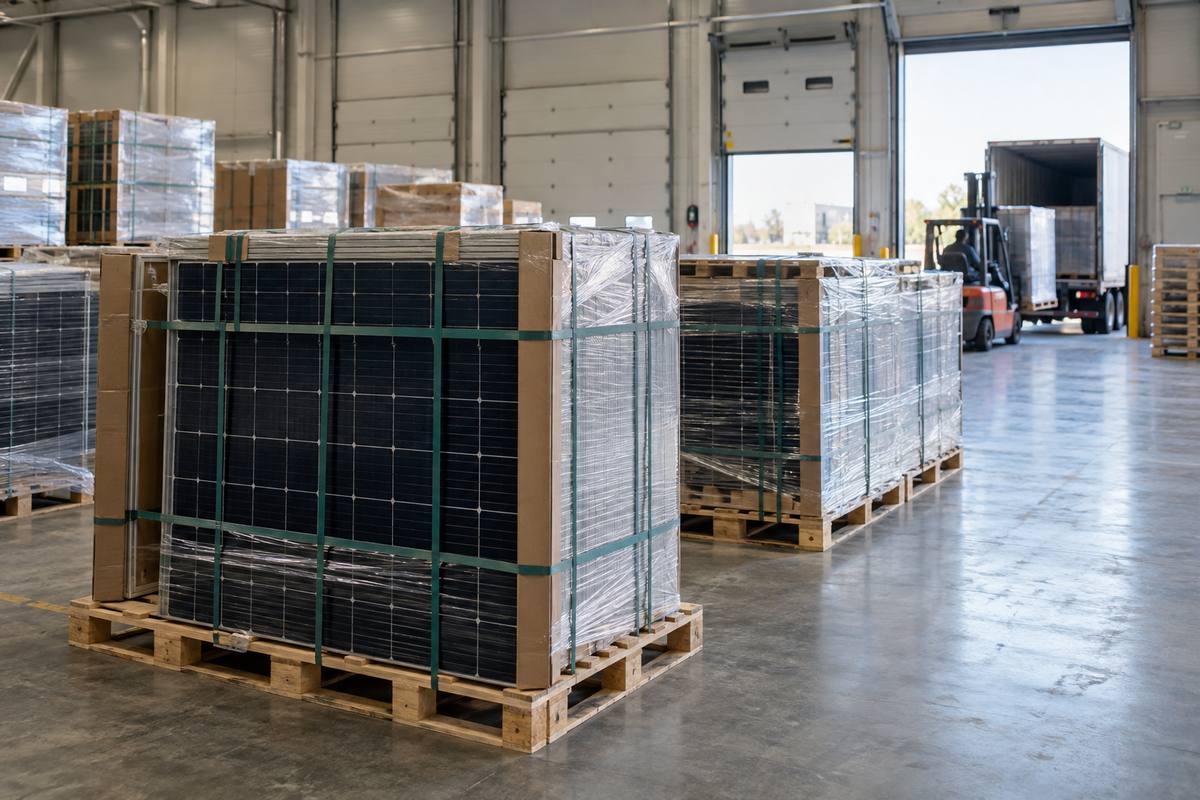
For a manufacturer planning solar export to Europe, the hard part is rarely the product. It is convincing distributors, EPCs and their lenders that you are compliant, bankable and still going to be around when a warranty claim arrives in year twelve. Finding solar manufacturer distributors in Europe starts with paperwork, not price lists.
This guide sets out what European buyers check, how to choose solar distribution partners, how EPC channels differ, and how to get in front of the right companies.
In short:
- Without IEC 61215 and IEC 61730 certificates, CE conformity and country-specific grid codes for inverters, most serious buyers will not engage.
- Bankability evidence, such as independent reliability testing, audited financials and a European warranty contact, often decides whether you get past the first meeting.
- Start with one or two well-matched distributors per target country rather than a long list of loose agreements.
- Utility-scale sales usually go direct to EPCs and developers, with lenders' engineers reviewing your factory and data.
What European buyers check, in order
Experienced distributors tend to screen new brands in a predictable sequence:
- Compliance: are the certificates current and issued by a recognised test lab?
- Bankability: will lenders and insurers accept the product?
- Local support: who handles technical questions, returns and warranty claims in Europe?
- Commercial terms: price, payment terms, minimum orders, stock availability.
Price comes last for a reason. A cheaper module that an installer's financier rejects is worth little to a distributor.
Certification and compliance: the entry ticket
| Requirement | Applies to | What it covers |
|---|---|---|
| IEC 61215 | PV modules | Design qualification and type approval: durability under thermal cycling, damp heat, mechanical load and more |
| IEC 61730 | PV modules | Safety qualification: electrical, fire and construction safety |
| CE marking (Low Voltage and EMC Directives as applicable) | Modules, inverters, electrical components | Declaration that the product meets EU requirements |
| National grid codes (e.g. EN 50549, VDE-AR-N 4105, CEI 0-21) | Inverters and storage systems | How equipment behaves on the grid in each country |
| WEEE producer registration | Modules, inverters | Take-back and recycling obligations, registered country by country |
| EU Batteries Regulation | Batteries | Labelling, documentation and due diligence duties, phased in over several years |
| MCS product certification | Products for UK homes | Needed for installations to qualify as MCS-certified |
A non-EU manufacturer also needs an economic operator established in the EU, such as an importer or authorised representative, to take responsibility for many CE-marked products. Check the details with a compliance adviser before your first shipment.
Supply chain scrutiny is rising too. The EU Forced Labour Regulation, due to apply from late 2027, will allow products made with forced labour to be removed from the EU market. Many distributors already ask for traceability documents. Our article on solar supply chain due diligence explains what buyers expect.
Bankability: proving you will be around for 25 years
Bankability is not a certificate. It is the combined judgement of lenders, insurers and technical advisers that your product and company carry acceptable risk. Evidence that helps:
- Independent reliability testing beyond the IEC minimum, such as extended stress testing by recognised labs.
- Audited financial statements showing a stable balance sheet.
- Factory audits by lenders' engineers or third-party inspectors, with clear quality control records.
- Warranty backing: a European entity or contact that handles claims, and ideally insurance cover for warranty obligations.
- Reference projects in Europe, with performance data you can share.
Third-party bankability lists carry weight with some buyers, although none of them is a quality guarantee. PVFirms' guide to Tier-1 solar panels and our article on what the Tier-1 label really means explain the nuances.
How to choose solar distribution partners
Distributors in Europe range from pan-European wholesalers to national specialists and installer buying groups. Match the partner to your product and target segment.
Selection checklist:
- Segment fit: residential, commercial or utility-scale.
- Geographic reach: which countries and regions they actually serve, not just list.
- Technical capability: in-house engineers who can support installers in the local language.
- Logistics: warehouses, delivery times, handling of breakage and returns.
- Brand portfolio: do they already carry a direct competitor?
- Financial health: can they hold stock and pay on time?
Contract points to negotiate:
- Exclusivity: avoid broad exclusivity for unproven partners. If you grant it, tie it to volume targets and a review date.
- Minimum order quantities and forecasts.
- Price protection if list prices fall while the distributor holds your stock.
- Warranty and returns process, including who tests and replaces faulty units.
- Marketing support: training, local-language datasheets and installer events.
Our guide to solar panel wholesale suppliers in Europe shows the market from the buyer's side, which helps you understand what distributors need from you.
Working with EPCs and developers
Utility-scale and large commercial projects often bypass distributors. EPC contractors and developers buy direct, frequently through tenders or frame agreements, and their lenders' technical advisers review your documentation in depth. Expect requests for factory audit access, detailed module data for yield modelling, delivery schedules tied to construction milestones and warranty terms reviewed by lawyers.
Building these relationships takes time. Attend industry events, prepare a strong technical data pack and approach developers early in their project pipeline. Browse the EPC and project developer directory to identify active firms by country, and read our EPC tender checklist to see the standards project owners impose on EPCs, which flow down to their suppliers.
Where to enter the European solar market first
Most manufacturers enter a few markets in sequence rather than the whole continent at once. PVFirms' European solar company statistics give a sense of where the industry is concentrated. As of October 2026, PVFirms lists 691 solar companies in Germany, 454 in the Netherlands, 267 in the United Kingdom, 266 in Italy, 237 in Spain and 233 in France.
When choosing your first markets, weigh grid code complexity, language, the strength of local distributors and the segment you serve. A residential inverter brand faces different hurdles from a utility-scale module supplier.
FAQ
What certifications do solar panels need to be sold in Europe?
PV modules are normally expected to carry IEC 61215 and IEC 61730 certification from a recognised test laboratory and to be CE marked with an EU declaration of conformity. Producers also need WEEE registration in each country where they place products on the market. For UK homes, MCS product certification is also needed.
Do I need a European subsidiary to sell solar products in Europe?
Not necessarily a subsidiary, but you do need an EU-based economic operator, such as an importer or authorised representative, for many CE-marked products. A local entity or warehouse helps with warranty handling and buyer confidence. Take advice on product compliance and tax before deciding.
Should I give a distributor exclusivity?
Only with conditions. Exclusivity can motivate a partner to invest in marketing and stock, but it can also lock you out of a market if they underperform. Limit it by country or segment, attach realistic volume targets and include a review or exit clause after a defined period.
How do European distributors evaluate new module brands?
Usually by checking certificates and test reports, reviewing bankability evidence, testing samples and assessing warranty support in Europe. Many also ask for references from existing customers. A complete, well-organised data pack shortens this process considerably.
Start building your European pipeline
Make it easy for distributors and EPCs to find you. List your company for free in the manufacturer directory, then use the distributor and components category to build a target list of potential partners by country.