How to Sell Excess Solar Inventory: Valuation, Paperwork and the Best Sales Channels
By PVFirms Editorial Team, Published on 2026-10-24 • 6 min read
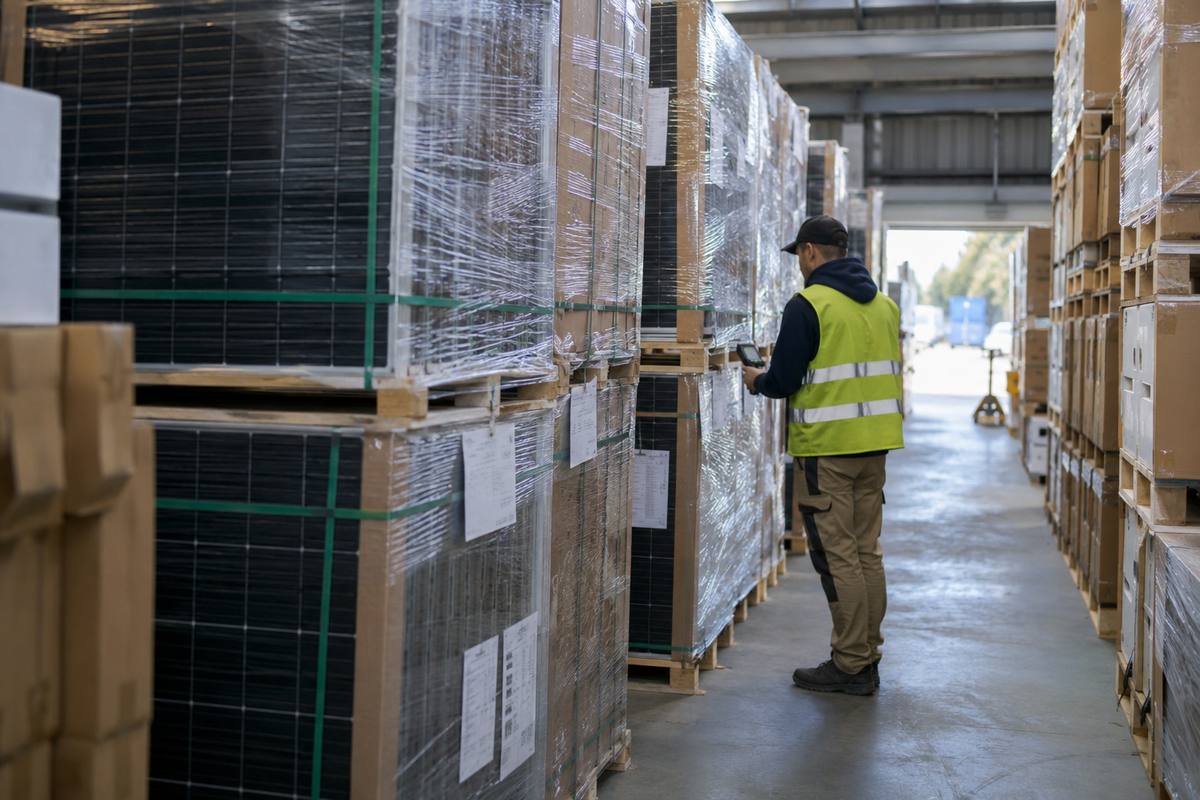
Almost every installer, distributor and EPC ends up with stock it no longer needs. A cancelled project leaves 400 modules on pallets, a model change strands a batch of inverters, or a bulk order made ahead of a price rise looks expensive a year later. The longer that kit sits, the less it is worth.
This guide explains how to sell excess solar inventory quickly and at a fair price: why surplus builds up, how to value it realistically, which documents buyers expect and which sales channels suit which situation.
In short:
- Surplus solar stock loses value over time as newer models arrive and warranty periods run down.
- Price against today's market for comparable new equipment, not against what you paid.
- Complete documentation, including datasheets, serial numbers, test data and proof of origin, often matters more to buyers than a small discount.
- Matching the channel to the batch size and urgency is the key to recovering the most value.
Why surplus solar panels and inverters pile up
Excess stock rarely comes from one mistake. Common causes include:
- Falling prices. Module prices dropped sharply in 2023 and 2024 amid global oversupply, leaving many companies holding stock bought at higher prices.
- Technology shifts. As TOPCon and other n-type modules replaced PERC, older wattage classes became harder to sell to customers comparing spec sheets.
- Cancelled or resized projects. Grid connection delays, failed financing or design changes leave materials unused.
- Over-ordering ahead of incentive deadlines or expected shortages.
- Grid code or certification changes that make certain inverter models unsuitable in a given country.
- Product line changes when a distributor drops a brand.
What holding stock really costs
Stock on a shelf is not neutral. It ties up cash, occupies warehouse space and needs insurance. Product warranties for modules and inverters may start from the manufacturing or delivery date rather than installation, so every month in storage can reduce the cover a buyer receives. Batteries need storage at an appropriate state of charge and temperature, as set by the manufacturer. Packaging can also deteriorate, and damaged boxes cut resale value.
Speak to your accountant about how to treat slow-moving stock in your books, as write-downs can affect your tax position.
How to value surplus stock
Start from the current market price of comparable new equipment, then adjust. As a working method:
| Factor | Effect on price | What to check |
|---|---|---|
| Age since manufacture | Older stock sells at a larger discount | Production date on labels |
| Remaining warranty | More cover supports a higher price | Warranty start rule and transferability |
| Technology and wattage | Older cell types and lower bins sell for less | Datasheet against current models |
| Packaging and condition | Sealed original pallets fetch the most | Photos of pallets and seals |
| Quantity and lot size | Full pallets or containers attract trade buyers | Packing lists |
| Location and delivery terms | Buyers factor in freight and handling | Incoterms and warehouse address |
| Certification for target market | Missing local approvals narrow your buyer pool | Certificates and grid code compliance |
Be realistic. An attractive price for a full, well-documented lot usually clears faster than holding out for a figure based on your original invoice.
Documents buyers expect
Professional buyers will ask for paperwork before making an offer. Prepare a data pack covering:
Modules - Manufacturer datasheet and model number. - Serial number list, ideally with factory flash test data. - Electroluminescence (EL) images for a sample, if available. - IEC certificates and the EU declaration of conformity. - Original purchase invoice or proof of origin for due diligence. - Photos of pallets, labels and storage conditions.
Inverters - Model, firmware version and production dates. - Grid code certificates for the buyer's country. - Confirmation of whether units are unopened.
Batteries - Manufacturing dates and storage records. - UN 38.3 test summary, which carriers require for shipping lithium batteries as dangerous goods.
Buyers are increasingly asked about supply chain origin. Our article on solar supply chain due diligence explains why proof of origin matters.
Where to liquidate solar stock: channels compared
| Channel | Speed | Price recovery | Effort | Best for |
|---|---|---|---|---|
| Return or buy-back from supplier | Variable | Often good, if offered | Low | Recent, unopened stock |
| Sale to a distributor or wholesaler | Fast | Moderate | Low | Large lots of popular models |
| Direct sale to installers and EPCs | Moderate | Good | Medium | Mid-sized lots with full documents |
| B2B marketplace listing | Moderate | Good | Medium | Most batch sizes, wide reach |
| Liquidator or auction | Fast | Lower | Low | Old, mixed or damaged stock |
| Export to another market | Slow | Variable | High | Large volumes with valid certification |
Many sellers combine channels: they ask the original supplier first, then list on a marketplace and contact their own installer network. Our guide to used solar panels covers second-hand modules, and the wholesale suppliers guide shows how trade buyers think.
Listing surplus stock on a free B2B marketplace
The PVFirms Marketplace lets verified companies list surplus and used modules, inverters, batteries, mounting systems, complete systems, spare parts and even project rights. Browsing is free, posting is free for verified companies and there is no commission. Buyers contact you directly and you agree terms between you.
To post, add your company if it is not already listed, then complete free verification, which checks your identity, registration and at least one live customer. PVFirms does not handle payment, shipping or escrow, so protect yourself: agree clear terms, consider payment before release or a letter of credit for large deals, and share inspection documents up front. You can also browse the distributor and components directory to find trade buyers by country.
Writing a listing that sells
- Put the exact model, wattage, quantity and location in the title.
- State the production date and warranty position honestly.
- Add clear photos of labels, pallets and seals.
- Give a price per unit or per watt, and say whether you will split lots.
- Explain delivery terms and whether buyers can inspect before collection.
Listings with complete information get fewer time-wasting enquiries and more serious offers.
FAQ
How quickly can I sell surplus solar panels?
It depends on the model, quantity and documentation. Recent, popular modules in full pallets with complete paperwork often attract interest quickly from installers and distributors. Older wattage classes, mixed lots or stock without serial data take longer and usually need a sharper price. Listing on several channels at once shortens the wait.
Can I sell surplus inverters into another country?
Yes, provided the model is certified for that country's grid code and the buyer can configure it correctly. Check the certificate list for the target market before quoting. An inverter that is not approved locally cannot normally be connected, which limits your buyer pool to markets where it is.
Do buyers expect a warranty on surplus stock?
Most expect the manufacturer warranty to transfer, at least for the remaining term. Check the manufacturer's terms on transfer and start date, and provide original invoices so the buyer can register a claim later. If warranty cover is short or unclear, reflect that in the price.
What documents should I prepare before listing surplus solar stock?
At minimum: datasheets, serial number lists, certificates, proof of purchase and clear photos of the stock and its packaging. For modules, flash test data and EL images add confidence. For batteries, include manufacturing dates and the UN 38.3 test summary needed for transport.
Turn idle stock into cash
Gather your data pack, set a realistic price against today's market and reach as many trade buyers as you can. If you are not yet verified, apply for free verification and list your surplus on the PVFirms Marketplace without commission.