Why Get Your Solar Company Verified? What Buyers Check and How Verification Works
By PVFirms Editorial Team, Published on 2026-10-24 • 6 min read
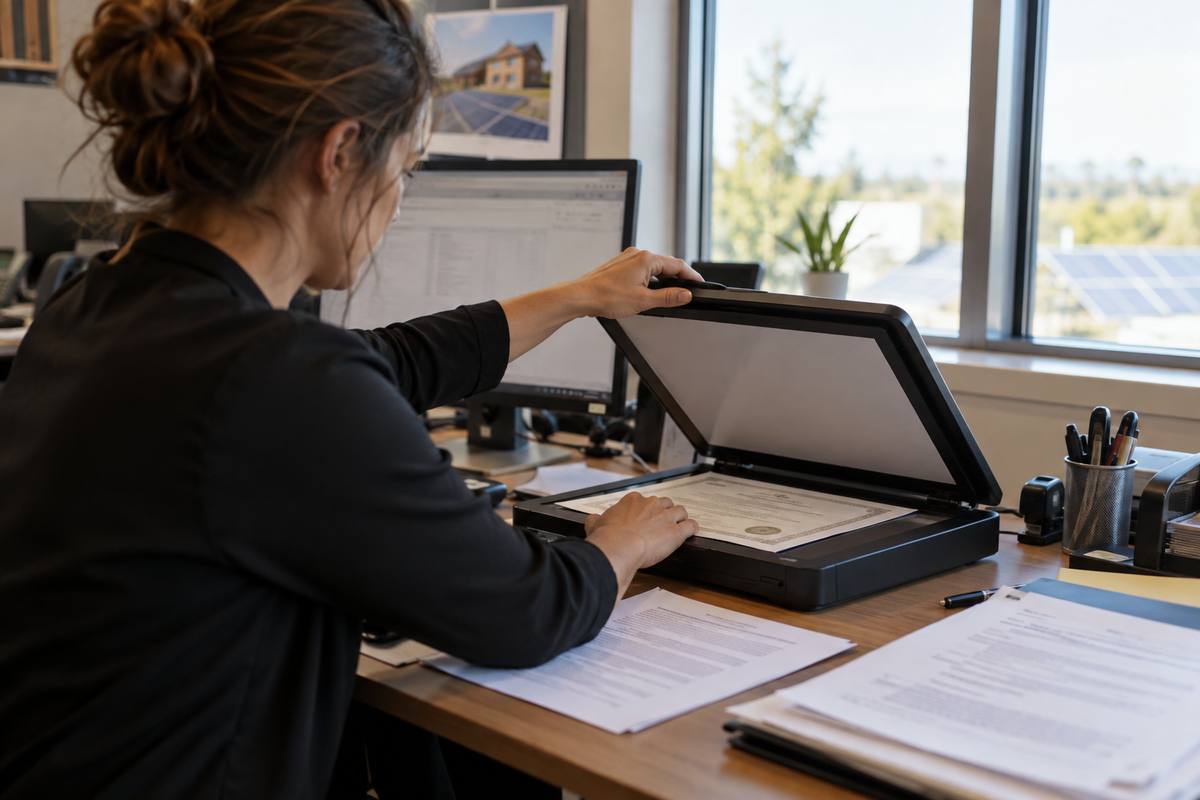
Before a buyer calls you, they try to answer a simple question: is this company real, and does it actually deliver? Being a verified solar company answers that question in advance. Independent checks of your registration, tax details and real customers remove an early doubt, whether the buyer is a homeowner comparing installers or a procurement team onboarding a new supplier.
This guide explains why verification matters to buyers, what a credible badge should involve, how the PVFirms tiers work, and how to apply without delays.
In short:
- Buyers use verification as an early filter against unregistered, inactive or impersonated companies.
- PVFirms runs three tiers, Listed, Verified and Premium Partner, each with published checks.
- Verification is free and cannot be bought. Search order depends on tier and rating, not payment.
- The Verified tier usually takes about 5–10 business days once documents are in.
What buyers worry about before they call
Homeowners worry about pressure selling, companies that vanish before a warranty claim, and firms that trade under a new name after closing the old one. Our article on solar panel scams and red flags shows the warning signs they look for.
Procurement teams run supplier onboarding. They need the correct legal entity, a valid VAT number, insurance and evidence of past work before a purchase order can be raised. Invoice fraud, where criminals impersonate a real supplier, makes them cautious about unfamiliar names.
Marketplace buyers dealing directly with sellers carry counterparty risk, so they want to know the seller is a registered, trading business.
EPCs and larger installers also vet their own subcontractors and suppliers. A roofing crew, electrical subcontractor or regional distributor that is already verified is quicker to approve.
A recognisable verification tier shortens each of these conversations. Consider a hypothetical facilities manager shortlisting installers for a 150 kWp warehouse roof. Three candidates look similar on price. One profile shows a Verified tier and a matching company number, another is only Listed, and the third has a website that names a different legal entity. The first company gets the site visit, simply because the basic questions are already answered.
Solar company verification versus certification and reviews
Verification is one trust signal among several. Each answers a different question.
| Signal | What it shows | What it does not show |
|---|---|---|
| Directory verification | The company exists, is registered and trades with real customers | Technical quality of individual installations |
| Installer certification (e.g. MCS, NABCEP, RGE) | Competence and compliance with a scheme's standards | Financial standing or current trading activity |
| Customer reviews | Satisfaction of past customers | Whether the company is legally registered |
| ISO 9001 | A documented quality management system | Price competitiveness or local availability |
Buyers trust a profile most when these signals point the same way. A credible verification scheme should check against official sources, require documents, publish its criteria, re-check over time, and never sell the badge.
How the PVFirms tiers work
| Tier | What is checked | Timing |
|---|---|---|
| Listed | The company exists in a business registry and has a live website | On listing |
| Verified | Identity, registration and VAT, plus at least one live customer, confirmed with documents | About 5–10 business days |
| Premium Partner | All Verified checks, plus liability insurance, 3+ independent client references, ISO 9001 or equivalent, and an editorial inspection | Re-checked every year |
Checks run against official business registers, VAT databases and OpenCorporates. Every tier is free, and no tier can be bought. That matters because a badge that can be purchased signals a marketing budget, not reliability. Buyers can filter the directory by verification status, and search order depends on tier and rating rather than payment. You can read more about the editorial approach on the About PVFirms page.
It is equally important to be clear about what verification does not do. It does not inspect individual installations, guarantee workmanship or handle payments between buyers and companies. Buyers still compare quotes, check certifications and read contracts. Verification simply makes sure the starting point, a real and trading business, is not in doubt.
How to apply, step by step
- List or claim your profile. If your company is not yet in the directory, add it for free. If it is, claim the existing profile.
- Align your details with the registry. Your legal name, registered address, company number and VAT number should match official records exactly.
- Prepare your documents. Expect to provide evidence of registration, VAT status and at least one live customer relationship. The verification page explains what is accepted. Redact personal data you are not required to share.
- Submit and respond promptly. Most Verified applications complete in about 5–10 business days. Quick answers to follow-up questions keep it on track.
- Consider Premium Partner. Gather your liability insurance certificate, at least three independent client references and your ISO 9001 or equivalent certificate, and plan for the editorial inspection and annual re-check.
Why verification applications stall
Most delays come from a few avoidable issues:
- the trading name on the website differs from the registered name, with no link between them;
- the VAT number belongs to a different entity in the same group;
- the website is offline or describes a different business;
- customer evidence cannot be tied to the applying entity;
- contact details on the profile do not match those in official records.
For groups with several entities, decide which one should appear in the directory before you apply. Usually it is the entity that signs customer contracts.
Using your badge in sales and marketing
Once verified, use the status accurately. "Verified on PVFirms" with a link to your profile is clear and checkable. Avoid wording that suggests a recommendation, an award or a ranking, because verification confirms facts rather than endorsing quality.
Add the link to proposals, tender responses and email signatures, alongside your installer certifications and reviews. Buyers comparing quotes can then check all three in a minute. Keep the profile current: a new address, a change of legal entity or a lapsed website can undermine the badge, so update details as soon as they change. Your profile also appears in category listings such as the installer directory, where buyers filter by tier. For the wider marketing picture, see our guides to solar marketing and SEO and getting solar leads.
Frequently asked questions
How long does solar company verification take?
The Verified tier usually takes about 5–10 business days from a complete submission. Missing documents or mismatched registry details are the most common causes of delay. Premium Partner involves additional evidence and an editorial inspection, so allow more time and plan for the yearly re-check.
Can I pay to be verified faster or rank higher?
No. Verification is free for every tier and cannot be bought, and search order depends on verification tier and rating, not payment. This independence is what gives the badge its value to buyers. The fastest route is a complete, consistent application.
What is the difference between Verified and Premium Partner?
Verified confirms identity, registration, VAT and at least one live customer. Premium Partner adds proof of liability insurance, three or more independent client references, ISO 9001 or an equivalent quality system, an editorial inspection and a yearly re-check. It suits established firms that want to show depth as well as legitimacy.
Is directory verification the same as installer certification?
No. Certification schemes such as MCS in the UK or NABCEP in the US assess technical competence against their standards. Directory verification confirms that your business is registered and actively trading. Buyers value both, so show them side by side on your profile and website.
Apply for verification
Check that your registry details, VAT number and website line up, then gather one piece of live customer evidence. Start your free application on the PVFirms verification page.