How to Choose the Best Solar Company in Europe (2026 Guide)
By PVFirms, Published on 2026-08-15 • 7 min read
Going solar at home is no longer just an environmental choice — it is a long-term budget decision. The best solar company for your property is the one that (1) designs a system that matches your roof and consumption, (2) prices it transparently, (3) stands behind the workmanship, and (4) makes financing and national incentives simple to understand. This guide explains what to compare, how solar companies differ across Europe, and how to avoid costly mistakes — whether you are a homeowner, a business, or a housing association.

What “Best Solar Company” Really Means
Europe has thousands of solar energy companies, from one-van local installers to pan-European EPC developers. The strongest providers tend to share the same traits, regardless of country:
- Verifiable reviews and references across independent platforms
- Bankable equipment (panels, inverters, batteries) from reputable manufacturers and distributors
- Clear contracts — especially for leases, financing and power purchase agreements (PPAs)
- Responsive service for warranty, monitoring and maintenance
- Local permitting and grid-connection experience, which is critical for a smooth commissioning
If you are evaluating a warehouse, farm, school or commercial property, note that the best commercial solar companies often differ from residential installers in engineering depth, project management and financing options. On PVFirms you can filter companies by exactly these roles.
The Types of Solar Companies You Will Compare
Rather than fixating on brand names, it helps to understand the categories of company you will encounter. Each has strengths and trade-offs, and the right choice depends on your project size and location.
1. Local and regional installers
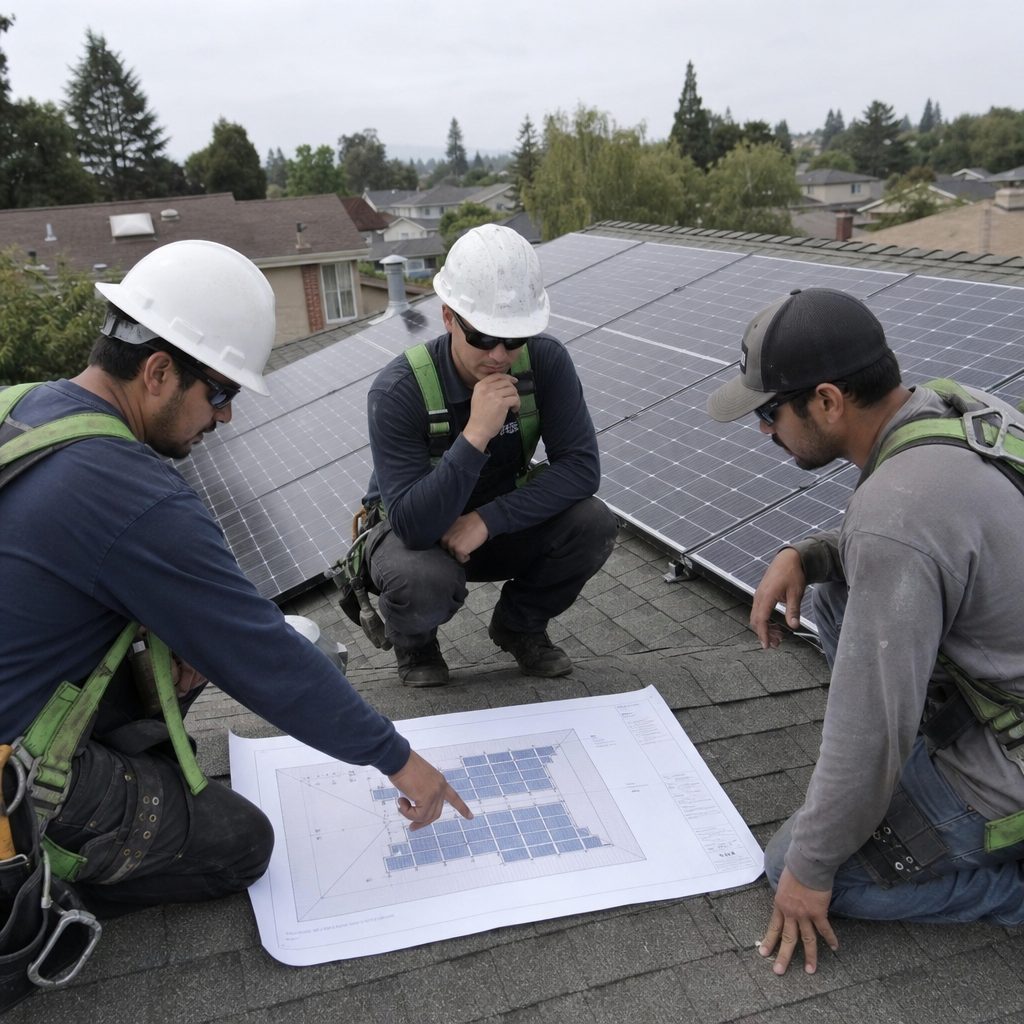
In many markets the best-performing option is a high-quality local installer with strong referrals and fast service. They usually win on site-specific design (shade, roof planes, cable runs), post-install responsiveness and established relationships with local inspectors and grid operators. When people search for a solar installer “near me”, this is often where the best value is found — provided you vet them properly (see the checklist below).
2. National and large-scale installers
Larger providers offer operational scale, standardised processes and sometimes streamlined online quoting or lease/PPA pathways that suit cash-flow-focused buyers. National scale does not always mean fast local scheduling, so it is worth comparing their pricing against two or three local bids.
3. EPC project developers
For larger estates, agricultural sites, commercial rooftops or mixed-use properties, EPC (engineering, procurement and construction) developers excel at power modelling and complex grid interconnection, though they are less optimised for typical residential jobs.
4. Manufacturers and distributors
Sometimes you will deal directly with, or specify equipment from, a panel or inverter manufacturer or a components distributor. Knowing who supplies the hardware matters for warranty claims and long-term spare-part availability.
5. Directories and installer marketplaces
Independent directories such as PVFirms let you compare pre-screened, verified companies across countries and categories. This speeds up comparison shopping and helps with quote consistency — but you should still confirm who actually holds the licence and the workmanship warranty.
Why “Best” Depends on Your Country
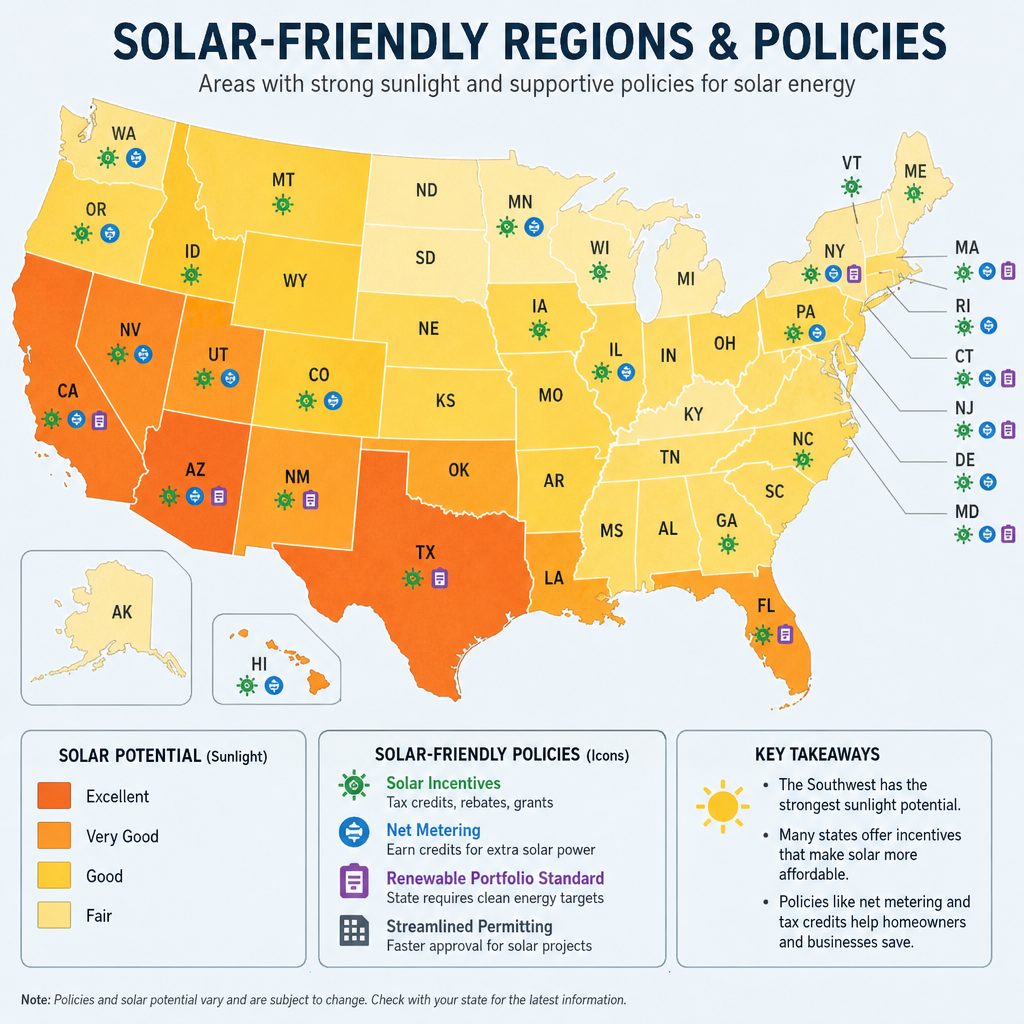
Because grid rules, incentives and permitting drive solar economics, the “best” company can change from one European market to another. A provider that is excellent in one country may have no permitting experience in another.
Rather than quoting figures that change frequently, focus on the questions that matter everywhere and confirm the current rules with the official body in your country:
- How does grid connection and metering work with your local network operator?
- What national or regional support applies — feed-in or export payments, net metering where available, VAT relief, grants or tax incentives?
- How fast is permitting in your municipality, and who handles the paperwork?
- If evening electricity prices are high, does storage-first planning make sense for your usage?
A good installer should model your bill offsets by season and explain any production guarantees. On PVFirms you can browse verified companies by country and category so you start with providers who actually work in your market.
What You Are Actually Paying For
Understanding the cost breakdown helps you spot inflated quotes and compare bids on a like-for-like basis. Typical line items include:
- Panels and inverters (and sometimes optimisers)
- Racking, flashing, wiring, conduit and protection devices
- Monitoring hardware and software
- Labour: roof work, electrical work and commissioning
- Permitting, inspections and grid connection
- Optional: battery storage, a critical-loads panel, a meter-box upgrade or additional roof work
If you are hunting for the cheapest installation, do not simply chase the lowest price — cheap installs become expensive when roof penetrations leak or a system fails inspection.
Buy, Loan, Lease or PPA?
Your financing choice can matter as much as the installer. The options available differ by country, but the shapes are similar across Europe.
Purchase (cash or loan)
Best for owners who want maximum long-term savings and control. You own the equipment, decide how to maintain or upgrade it, and typically capture the most upside if you stay in the property long-term. Where available, you may also qualify for grants, low-interest loans or VAT relief.
Lease
You pay a fixed monthly amount to use the system. Upfront cost is lower and the provider usually handles maintenance, but lifetime savings can be smaller than ownership and terms can be restrictive.
Power Purchase Agreement (PPA)
A PPA means you buy the electricity the panels produce at a set price per kWh, often with little or no upfront cost. Your bill can fall if the PPA rate is meaningfully below grid prices, but the contracts can be complex — read the price escalators, buyout options and transfer terms carefully. A good installer will show a side-by-side lifetime comparison with clear assumptions.
How to Choose a Solar Installer: Practical Vetting Steps
If you read only one section, make it this one — how you vet an installer determines your outcome more than any brand name. Ask every shortlisted company for:
- Proof of licence and insurance — and who actually installs (own staff vs subcontractors)
- A production estimate with its assumptions (shade, orientation, tilt, annual degradation)
- A single-line diagram and equipment spec sheets
- A clear plan for permitting and grid approval
- A written workmanship warranty, separate from the manufacturer warranties
- References nearby, ideally on a similar roof type

Solar Contractor Checklist
Use this checklist to compare bids on equal terms:
- Total price, price per watt, and exactly what is included (permits? monitoring? roof work?)
- Panel model, inverter model, and who the manufacturers and suppliers are
- Workmanship warranty length and coverage
- Warranty and maintenance process — who to call and typical response times
- Monitoring app access and alerting
- Change-order policy — what triggers extra costs
- Timeline estimate and cancellation terms
- Battery readiness or included storage, and the recommended battery configuration
Reading Reviews Without Getting Misled
Reviews matter, but interpret them like a professional:
- Look for patterns: delays, communication problems, surprise fees, poor post-install service
- Prioritise detailed reviews that mention permitting, inspection and service calls
- Verify the company name on your contract matches the installer being reviewed
- Check how the company responds to negative feedback
Also confirm whether the reviewer bought, leased or used a PPA — experience differs by contract type. Directories that verify listings, like PVFirms, add a layer of trust on top of raw reviews.
Red Flags: Avoiding Solar Scams
Solar is a common target for aggressive sales tactics. Watch for:
- “Sign today or lose the incentive” pressure
- Vague promises about “free solar” without contract clarity
- No site visit before final pricing
- Claims of unrealistic savings with no assumptions shown
- A missing licence number or no proof of insurance
- A contract that hides escalators, dealer fees or balloon payments
If something feels off, pause and get another quote. The best solar companies never rush you.
Quick Takeaway
The best approach is simple: compare three to five bids (including at least one strong local installer), demand clear contracts and equipment specs, and choose the provider with proven installation quality and reliable service — not just the lowest price. Whether you are weighing national brands, comparing installers in your own country, or scoping a commercial project, the best results come from transparent pricing, strong warranties, and companies that can clearly explain grid connection, incentives, financing and long-term maintenance.
Ready to shortlist? Browse verified solar companies on PVFirms by country and category — installers, manufacturers, distributors, consultants and EPC developers across Europe.