Solar Power Installation: A Practical Guide to Home Clean Energy
By PVFirms, Published on 2026-08-15 • 7 min read
If you are tired of unpredictable electricity prices and want a practical path to clean energy, residential solar is one of the most proven upgrades you can make. Today's systems are more efficient, financing is more flexible, and national incentives can significantly improve the payback — which leaves many homeowners asking a single question: is solar worth it? This guide walks through how solar works, the system types, what drives cost, and how to choose an installer, so you can compare quotes with confidence.
Why homeowners are choosing solar
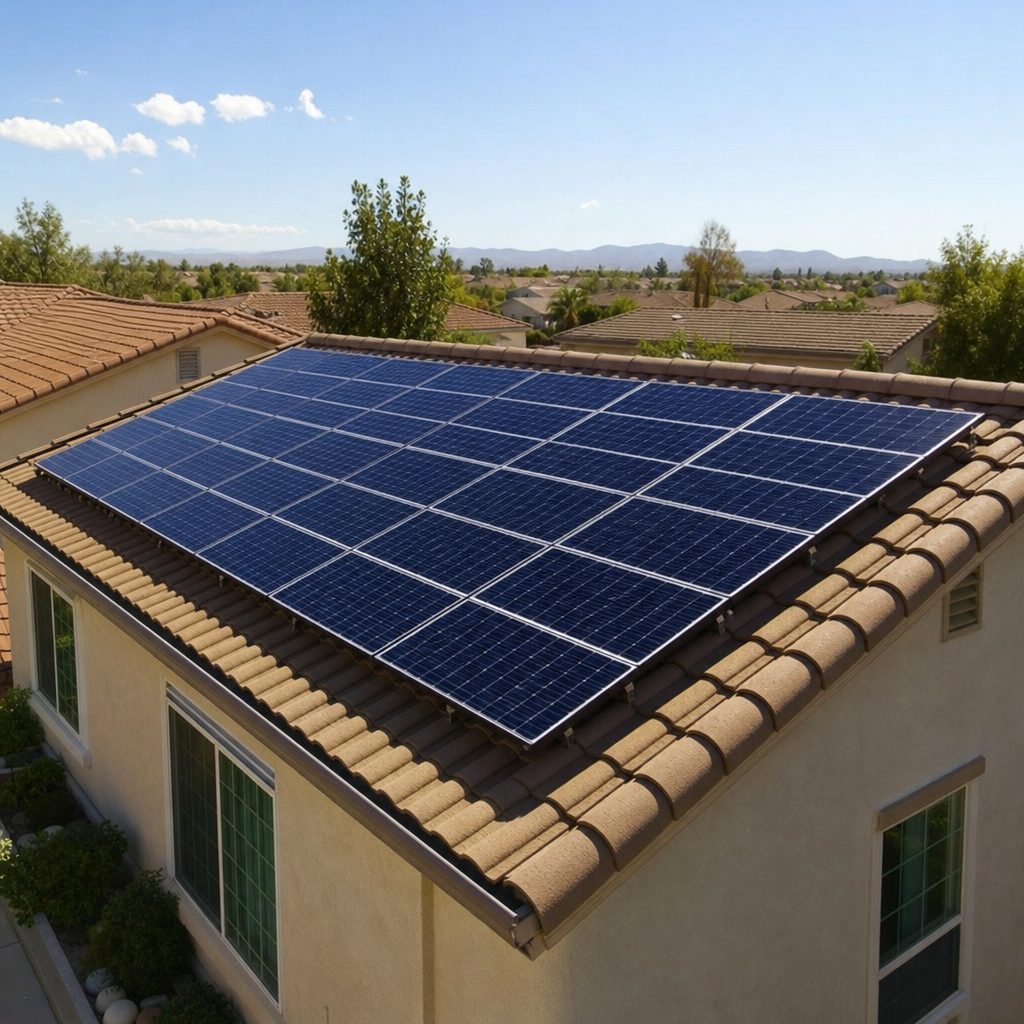
Installing solar panels is not just a trend — it is a measurable home-improvement decision. A properly sized system can help you cut your electricity bill, increase energy independence and lower your household's carbon footprint by using renewable energy. Key benefits include:
- Lower monthly electricity costs, especially with self-consumption and, where available, export payments or net metering
- Long-term protection against rising grid prices by generating your own power
- Higher resilience when paired with a battery (see storage options below)
- A real environmental impact by offsetting fossil-fuel generation
How solar panels work (in plain language)
Understanding how solar panels work makes it easier to compare quotes and avoid overspending. The simple flow:
- Solar panels convert sunlight into DC electricity (the photovoltaic effect).
- An inverter converts that DC into the AC power your home uses.
- Your home uses that energy first; any surplus flows to the grid (grid-tied) or into a battery (hybrid/off-grid).
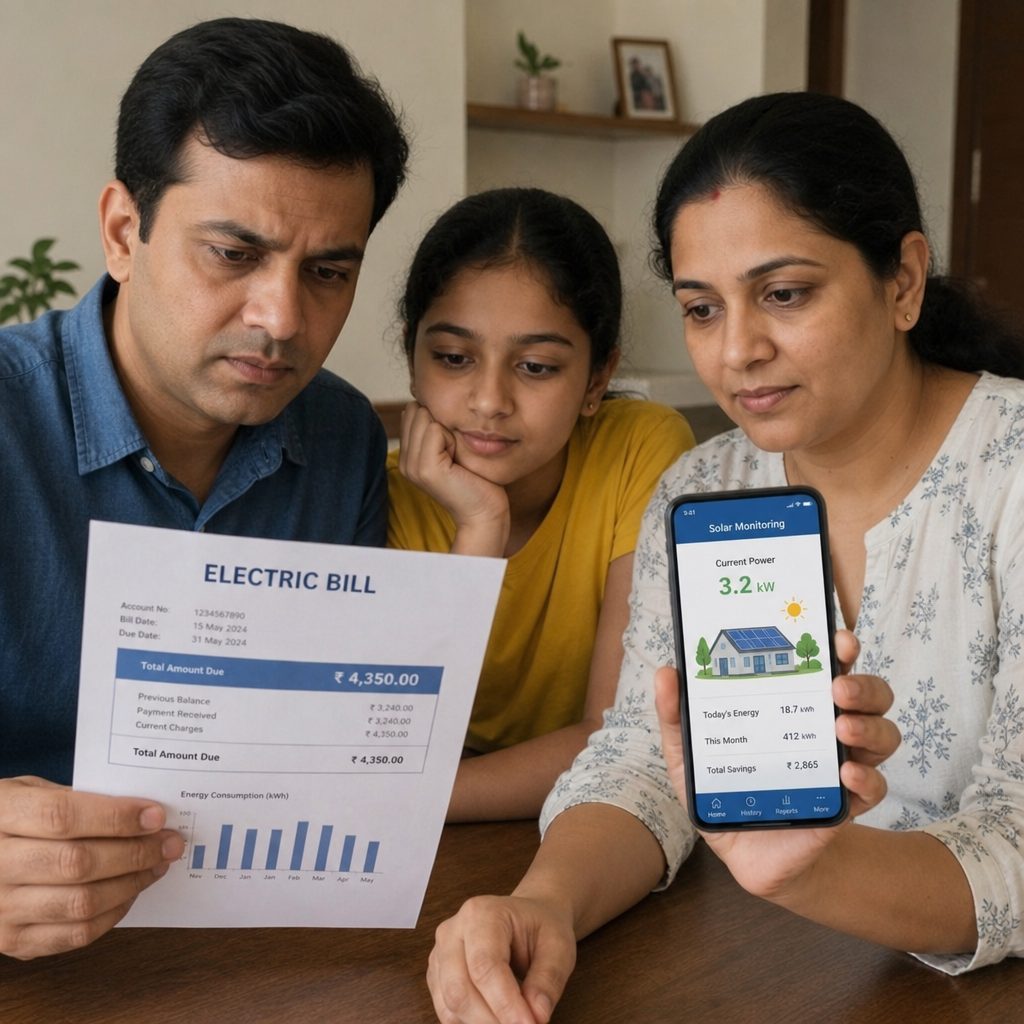
- Monitoring software tracks production and consumption in real time.
Efficiency factors that change real-world output
A panel's nameplate rating is only part of the story. Real production depends on factors such as:
- Roof orientation and tilt
- Shading from trees, chimneys or nearby buildings
- Local climate and temperature (panels often produce a little less in extreme heat)
- Dust, pollen and general soiling
- Inverter sizing and overall system-design quality
Grid-tied, off-grid or hybrid: which setup fits your home?
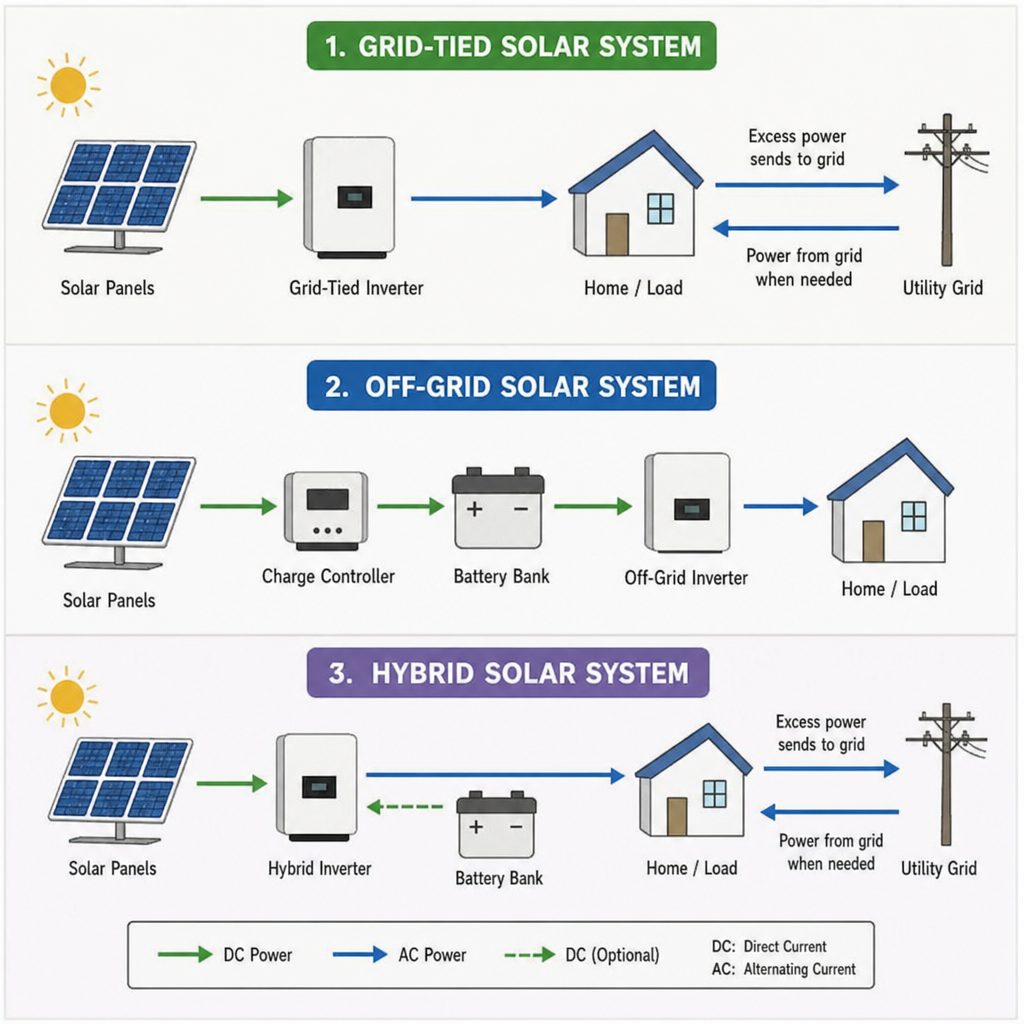
Most homeowners start with a grid-tied system because it is typically the lowest-cost way to go solar.
Grid-tied (most common)
A grid-tied system connects to the public grid. If you produce surplus energy, you may receive credits or export payments where the rules in your country allow. Best for homeowners focused on savings and simplicity, areas with a reliable grid, and anyone who wants a strong return without buying batteries immediately.
Off-grid (full independence)
Off-grid means no grid connection — your system must cover all usage, including nights and storms. That requires robust batteries and often a generator backup. Best for remote properties where a grid connection is expensive or unavailable, and for owners who prioritise independence over lowest cost.
Hybrid (grid plus battery)
A hybrid system blends both: you stay grid-connected but keep stored energy for outages and time-of-use price strategies. This is where battery storage matters most.
Battery storage: what to consider
Batteries can turn solar from a bill-saver into a backup-power solution. When comparing storage options, look at:
- Usable capacity (kWh) — how long you can run essentials
- Power output (kW) — whether it can start large loads (heat pump, pump, AC)
- Round-trip efficiency — energy lost during charging and discharging
- Warranty — usually defined in years and throughput cycles
- Backup design — whole-home versus a critical-loads subpanel
Actionable tip: list your “must-run” items (fridge, Wi-Fi, lights, medical devices) and size storage for those first — it is the most cost-effective approach.
Inverter types compared (and why it matters)
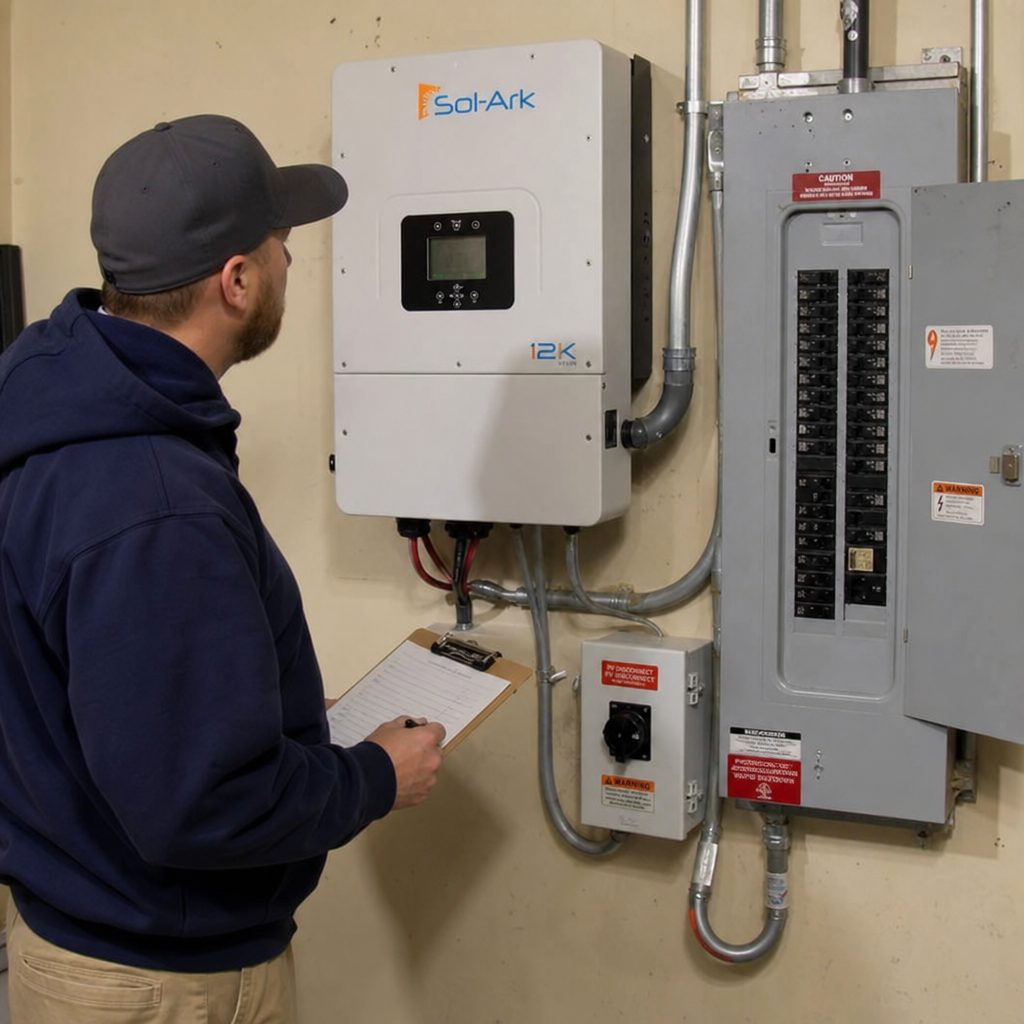
Your inverter choice affects performance, monitoring and shade tolerance:
String inverter — one central inverter for multiple panels
Pros: lower upfront cost, simple maintenance. Cons: shade on one panel can reduce output across the whole string, depending on the design.
Microinverters — one inverter per panel
Pros: excellent for complex roofs and partial shading, with panel-level monitoring. Cons: higher equipment cost.
Power optimisers plus string inverter
Optimisers on each panel paired with a central inverter. Pros: good shade performance and monitoring, often a middle ground on cost. Cons: slightly more components than a basic string system.
Tip: if your roof gets partial shade, microinverters or optimisers often improve real-world production more than paying extra for higher-wattage panels.
Choosing panels: what “best” should mean for you
There is no single best panel — the right choice depends on your roof, goals and budget. Instead of chasing a brand name alone, compare panels by:
- Efficiency and temperature coefficient
- Product warranty and performance-warranty terms
- Degradation rate (how quickly output declines over time)
- Compatibility with your inverter and roof layout
- Manufacturer track record and local availability
Practical approach: ask your installer for two or three panel options at different price points and compare cost per watt and expected annual production.
System cost: the numbers that actually drive ROI
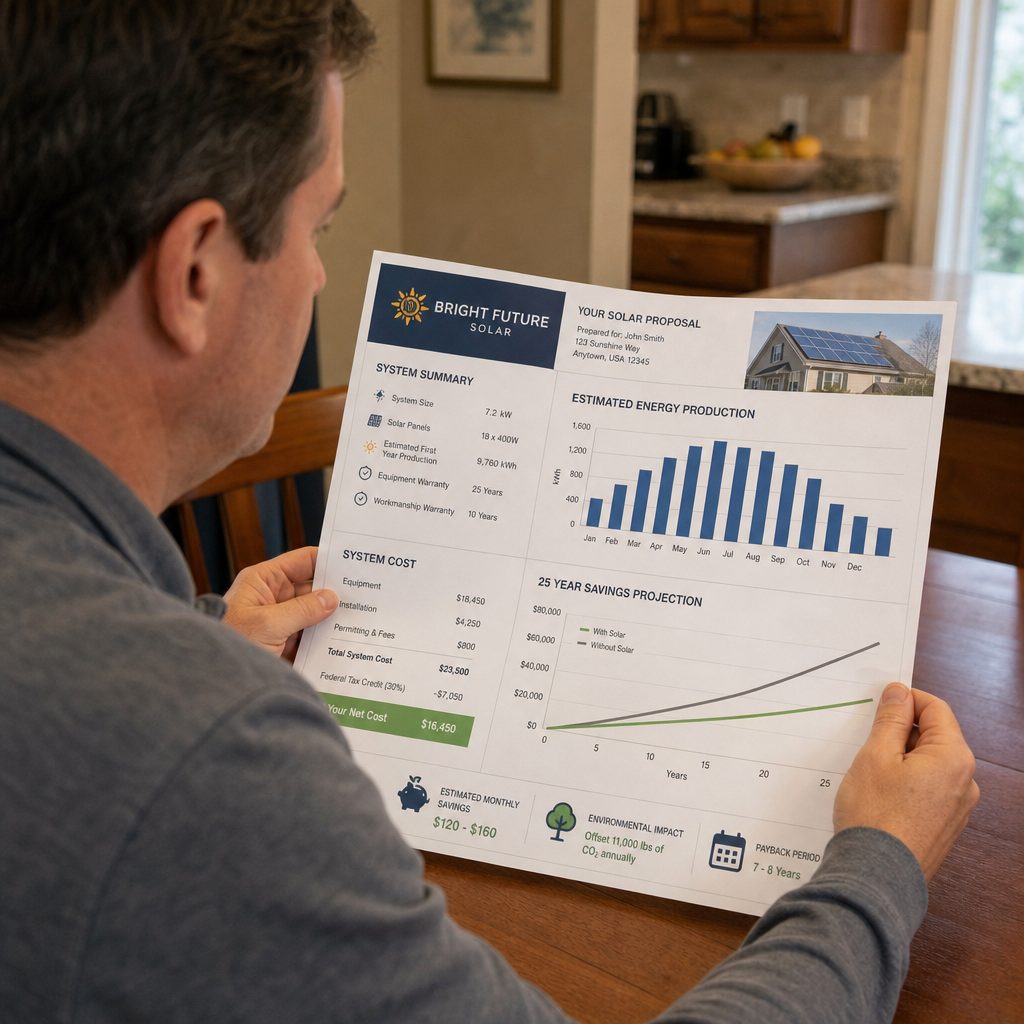
Cost varies by country, roof complexity, electrical upgrades, permitting and equipment. To evaluate quotes accurately, request:
- Total installed price and price per watt
- Expected first-year production (kWh) and the assumptions used
- A full equipment list (panels, inverter, racking, monitoring)
- Warranties (labour, roof penetration, workmanship)
- Any needed upgrades (main panel/meter box, roof work, cabling)
To judge whether solar is worth it, compare your current annual electricity spend, your expected annual production and export rules, your financing terms versus paying cash, and how long you are likely to stay in the home.
Tip: do not optimise only for the lowest bid — optimise for the lowest cost per delivered kWh over time, which depends heavily on design quality and installer workmanship.
Incentives and subsidies: what to confirm
Support schemes differ across Europe and change over time, so always confirm the current rules for your country and region. Many households start with incentive questions because they can materially reduce the net cost. Before you sign, verify:
- Which equipment qualifies (solar, and sometimes storage, depending on the current programme)
- Whether the incentive is a grant, a low-interest loan, VAT relief, or an export/feed-in payment
- Any application deadlines — several programmes must be applied for BEFORE work starts
- The documentation you will receive from the installer
- How national and regional programmes combine, and any conditions attached
Actionable tip: ask your installer for an “incentive summary” in writing, then confirm the details with the official body or a qualified adviser.
Will solar work in cloudy weather?
Yes — solar panels still produce electricity in cloudy weather, just less than on clear days. Modern panels capture diffuse light, and production can remain meaningful, especially in the long-daylight months. To make solar perform well in cloudier regions:
- Prioritise a shade-aware design (microinverters or optimisers where appropriate)
- Keep panels clean and unobstructed
- Size the system on annual usage and realistic production estimates — not a single sunny-day assumption
Simple maintenance tips
Solar systems are generally low-maintenance, but a little attention protects performance:
- Check your monitoring monthly for sudden production drops
- Trim trees before shading grows into a problem
- Rinse panels occasionally if you live in a dusty or pollen-heavy area (follow the manufacturer's guidance)
- After major storms, do a visual ground check for debris or damage
- Book a professional inspection if you notice persistent underproduction
Safety note: avoid climbing onto the roof unless you are trained and equipped — call a professional instead.
How to choose the right installer
A strong installation is less about hype and more about engineering and accountability. When selecting an installer, look for:
- Clear production modelling and a shading analysis
- Transparent equipment specs (not vague “premium panels” language)
- A workmanship warranty you actually understand
- Proven local permitting and grid-connection experience
- References from recent installs in your area
Good questions to ask: Who handles permitting and grid connection? What happens if production is below the estimate? What roof warranty applies around penetrations? What monitoring and support do you provide after install? On PVFirms you can compare verified installers by country and category before you request quotes.
The typical installation process
A practical installation timeline usually includes:
- Site assessment and system design
- Permits and grid application
- Install day(s): racking, wiring, panels, inverter
- Inspection
- Grid approval and commissioning
- Monitoring setup and a system walkthrough
The takeaway: making solar a smart move
For many households, home solar is a practical way to cut costs, gain control over energy, and contribute to renewable-energy goals. The best results come from matching equipment and design to your roof, understanding your grid operator's rules, and choosing an installer who models performance honestly.
Ready to start? Browse verified solar companies on PVFirms — installers, manufacturers, distributors and consultants across Europe.