Are Solar Panels Worth It in the UK? How to Work Out Your Payback Period
By PVFirms Editorial Team, Published on 2026-10-24 • 6 min read
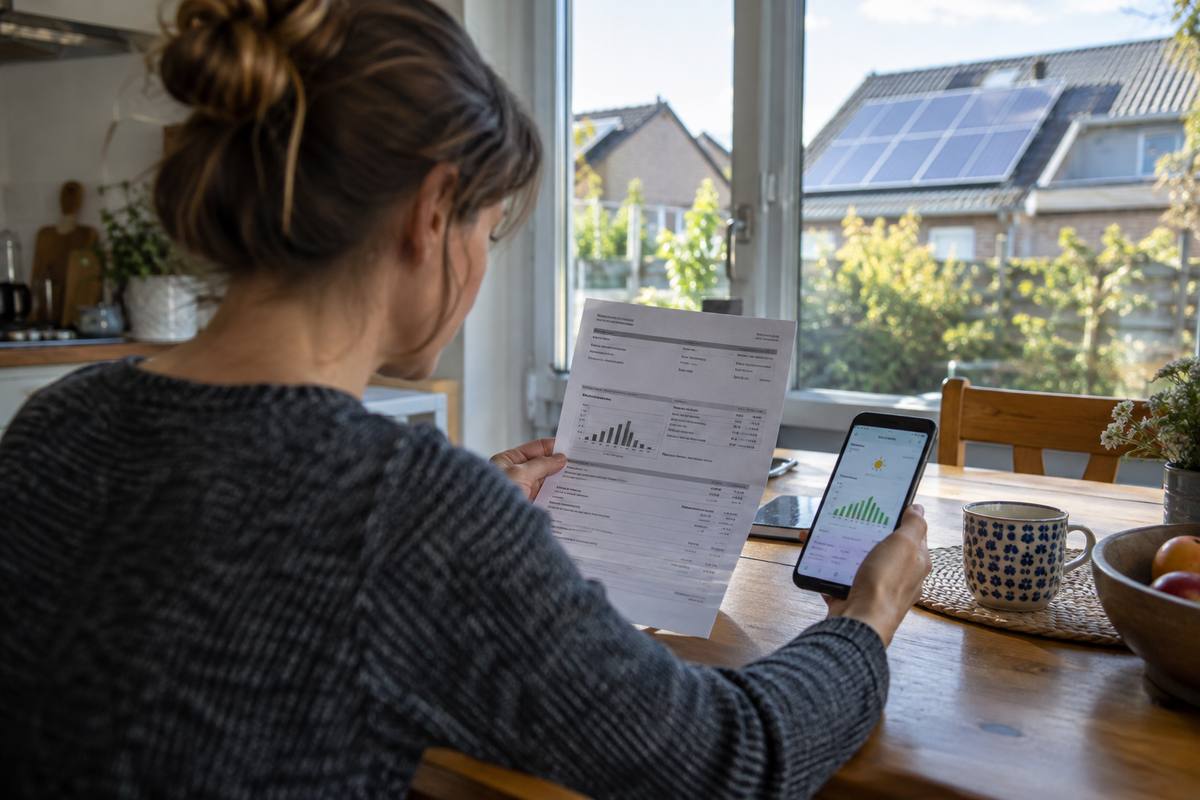
Are solar panels worth it in the UK, given grey winters and northern latitudes? For most owner-occupied homes with a reasonably unshaded roof, yes. A typical system pays for itself in roughly 8–14 years and keeps producing for decades after that. The exact figure for your home depends on four inputs you can estimate yourself: system cost, annual generation, how much of that generation you use, and what you pay for electricity.
Rather than give you a single headline number, this guide shows the method, works through an example with every assumption visible, and then shows which assumptions move the answer most. The same approach applies in Ireland, using euro figures and local tariffs.
In short:
- UK systems typically generate around 800–1,000 kWh per kWp per year, with the south of England at the higher end.
- The share of solar power you use at home (self-consumption) has more effect on payback than almost anything else.
- In our illustrative example, a 5 kWp system pays back in about 10 years without a battery.
- Batteries raise self-consumption but also raise cost, so they often lengthen simple payback.
How to work out your solar panel payback period
Simple payback is the installed cost divided by the yearly financial benefit. To estimate the benefit:
- Estimate annual generation. Multiply system size in kWp by the expected yield for your area. Your installer's MCS estimate gives a site-specific figure.
- Split it into used and exported. Without a battery, many homes use somewhere around 30–50% of their generation directly. The rest goes to the grid.
- Value each part. Electricity you use is worth your import unit rate, because you no longer buy it. Exported electricity is worth your export tariff.
- Divide cost by the yearly total. That gives payback in years, before allowing for price changes, panel degradation or maintenance.
Simple payback is a sanity check, not a forecast. Rising electricity prices would shorten it. Falling prices, or an inverter replacement partway through, would lengthen it.
A worked example with every assumption shown
The figures below are illustrative assumptions, not quoted tariffs. Replace them with your own.
| Input | Assumption |
|---|---|
| System size | 5 kWp (twelve panels of about 420 W) |
| Installed cost | £7,500, no battery |
| Yield | 900 kWh per kWp per year (Midlands, south-facing roof) |
| Annual generation | 4,500 kWh |
| Self-consumption | 40%, so 1,800 kWh used at home |
| Import unit rate | 27p per kWh |
| Export rate | 10p per kWh on 2,700 kWh exported |
The yearly benefit is 1,800 × £0.27 = £486 in avoided purchases plus 2,700 × £0.10 = £270 in export income, about £756 in total. Simple payback is £7,500 ÷ £756, or roughly 9.9 years.
Over a 25-year life, a fuller analysis would subtract an inverter replacement (often needed once in that period) and allow for gradual panel degradation. Even so, the system in this example produces savings for well over a decade after it has paid for itself.
Self-consumption: the number that decides your return
The table keeps the same £7,500 system and tariffs, and changes only yield and self-consumption. Figures are simple payback in years.
| Yield (kWh/kWp) | 30% used at home | 40% | 50% | 70% |
|---|---|---|---|---|
| 800 (northern England, Scotland) | 12.4 | 11.2 | 10.1 | 8.6 |
| 900 (Midlands, Wales) | 11.0 | 9.9 | 9.0 | 7.6 |
| 1,000 (southern England) | 9.9 | 8.9 | 8.1 | 6.8 |
Raising self-consumption from 30% to 50% cuts payback by more than a year wherever you live. Practical ways to get there cost little: run the dishwasher and washing machine on timers around midday, heat water with a solar diverter or a heat pump schedule, and charge an EV in daylight if you are home.
How location and roof direction change the answer
Yield is the second big lever. Southern England typically sits near 1,000 kWh per kWp, while parts of Scotland can fall below 800. Ireland generally falls within a similar range to the north of England and Wales.
Orientation matters too. East- and west-facing roofs commonly produce somewhere around 15–20% less than a south-facing roof at a similar pitch, but spread generation across morning and evening, which can raise self-consumption. North-facing roofs are rarely worthwhile on a steep pitch. Shading from chimneys or trees can cost more than orientation, which is where the choice of inverter matters.
Does a battery improve solar panels' return on investment?
A battery pushes self-consumption up, often to 60–80%, but adds several thousand pounds to the cost. Using the same tariffs, adding a battery at £4,000 to our 900 kWh/kWp example and lifting self-consumption to 70% gives a combined payback of about 11.7 years, longer than the panels alone.
Batteries can still make sense if you use a time-of-use tariff to charge overnight in winter, want backup power, or have high evening demand. They simply need their own business case. Our guide to solar battery storage costs and value covers that in detail, while our piece on how the Smart Export Guarantee works helps you value the exported share.
When solar panels may not be worth it
Do solar panels save money for everyone? Not always. The case is weak when:
- the roof is heavily shaded, or faces north on a steep pitch;
- the roof needs replacing within a few years, unless you do the roof first;
- you plan to move soon and do not expect the system to add value at sale;
- your daytime use is very low and export rates on offer are poor;
- a quote is far above typical market prices for the system size.
Turning estimates into real numbers
Ask at least three MCS-certified installers for an estimate of annual generation, and compare their assumptions on shading and self-consumption, not only the price. PVFirms lets you browse solar companies across the United Kingdom and request quotes for free. For background on support schemes, read the PVFirms UK solar incentives guide and our broader UK solar market guide. For typical system prices by size, see our 2026 UK solar cost breakdown.
Frequently asked questions
What is a good payback period for solar panels in the UK?
Anything under about 12 years is generally considered reasonable for a domestic system expected to last 25 years or more. Payback under 10 years is good, and usually reflects a sunny location, high daytime usage or a competitive installation price. Remember that simple payback ignores future price changes, so treat it as a comparison tool rather than a guarantee.
Do solar panels add value to a house?
They can, especially when buyers see lower running costs on the Energy Performance Certificate and the system is owned outright with paperwork in order. The effect varies by area and buyer. Leased or rent-a-roof systems can complicate a sale, so owning the panels and keeping the MCS certificate, warranties and generation records helps.
Are solar panels worth it in Ireland?
The method is the same: generation, self-consumption and the value of each kWh. Irish homeowners may also be able to reduce upfront costs through the SEAI solar PV grant and receive payments for exports under the Clean Export Guarantee. Grant levels and export rates change, so check current terms with SEAI and suppliers, then compare solar companies in Ireland.
How much do solar panels save per year?
In the illustrative example above, a 5 kWp system saves and earns roughly £750 a year. Your figure could be higher or lower depending on system size, roof, location, tariffs and how much electricity you use during daylight. An installer's MCS generation estimate combined with your own usage data gives the most reliable starting point.
Where to go from here
Download a year of usage data from your supplier, plug your own numbers into the method above, and ask installers to show their workings. When you are ready to collect quotes, start with UK solar installers on PVFirms.