The Smart Export Guarantee Explained: How to Get Paid for Your Solar Power
By PVFirms Editorial Team, Published on 2026-10-24 • 7 min read
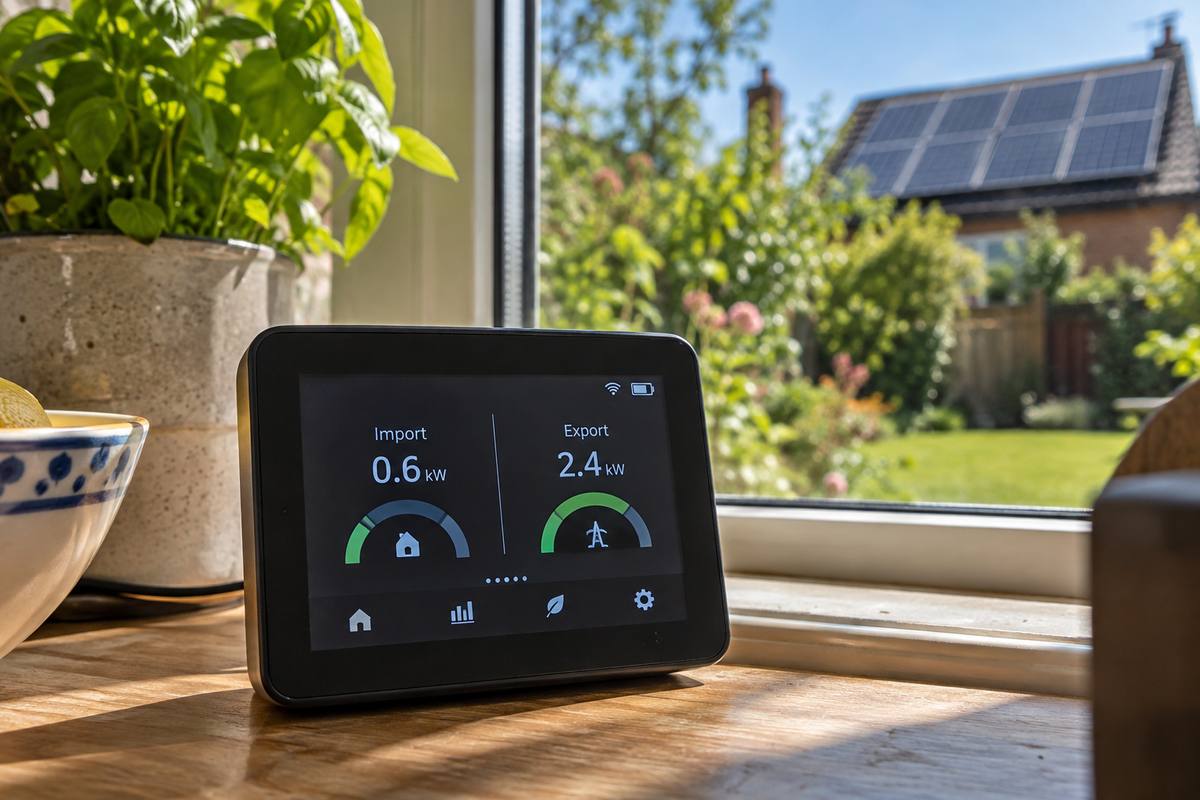
The Smart Export Guarantee (SEG) is the scheme that lets households in Great Britain sell surplus solar electricity to the grid. Larger electricity suppliers must offer at least one export tariff, but each supplier sets its own price and terms. That means two neighbours with identical panels can earn very different amounts from the same sunshine.
This guide explains how the smart export guarantee works, what you need to qualify, how to sign up, and how to compare SEG tariffs on more than the headline number. We deliberately do not quote rates here, because suppliers change them often. The method below will still work when they do.
In short:
- The SEG requires suppliers with at least 150,000 domestic customers to pay for exported electricity, at a rate they choose but which must always be above zero.
- You need an MCS-certified installation (for systems up to 50 kW) and a smart meter that can record exports.
- Compare tariffs on rate type, import tie-ins, battery rules and contract length, not only the price per kWh.
- Using your solar power at home is usually worth more than exporting it, so export income is a bonus rather than the main return.
What is the Smart Export Guarantee?
The SEG started on 1 January 2020. It replaced the export element of the Feed-in Tariff, which closed to new applicants in 2019. Unlike the old scheme, the government does not set a payment level. Instead, the obligation is on suppliers: those above the size threshold must offer an SEG tariff, and smaller suppliers can choose to offer one too.
Ofgem administers the scheme and publishes guidance and the list of suppliers taking part on its website. The SEG covers England, Scotland and Wales. Households in Northern Ireland are outside it, although some suppliers there offer their own export arrangements.
Eligible technologies include solar PV, onshore wind, hydro and anaerobic digestion up to 5 MW, and micro combined heat and power up to 50 kW. For homeowners, solar PV is by far the most common route.
Who can get SEG payments?
Before any supplier will pay you, three conditions need to be met.
| Requirement | What it means | Practical tip |
|---|---|---|
| Certified installation | Systems up to 50 kW need an MCS certificate; larger ones use a different certification route | Keep the MCS certificate safe; you will need its number |
| Export metering | A smart meter able to record half-hourly export readings | Ask your supplier to confirm the meter is configured for export before applying |
| Right to the export | You must own the installation or have the owner's permission | Tenants and leaseholders may need landlord confirmation |
| Not already paid for export | Systems receiving Feed-in Tariff export payments have different rules | Check with your FIT licensee before switching |
There is no "deemed" export under the SEG. You are paid only for what the meter records, which is why a working smart meter matters.
How to sign up, step by step
- Get the paperwork from your installer: MCS certificate, commissioning documents and the network operator notification.
- Check your meter. If you do not yet have a smart meter, request one. If you do, ask whether export readings are being collected.
- Shortlist SEG tariffs. You do not have to export to the same company that supplies your electricity, although some tariffs are only available to import customers.
- Apply with the supplier you choose, usually online, providing your MCS number, meter details and proof of ownership.
- Confirm the start date and payment method. Some suppliers credit your bill; others pay into a bank account monthly or quarterly.
Exports before your application is accepted may not be paid, so do not leave this until months after installation.
How to compare SEG tariffs properly
Searching for the best SEG rates usually leads to a table of headline prices. Those prices are a starting point, but these features often matter just as much:
- Fixed or variable. A fixed rate gives certainty for a set period. A variable rate can rise or fall with notice.
- Flat or time-varying. Some export tariffs pay more at peak times. They suit homes with a battery that can hold energy back.
- Import tie-in. The most generous export tariff solar owners see advertised may require you to buy electricity from that supplier too. Add up both sides before deciding.
- Battery and grid-charged exports. Some suppliers will not pay for electricity that was imported, stored and exported again. Read the eligibility wording if you plan to trade from a battery.
- Contract length and exit terms. A short commitment keeps you free to switch if better offers appear.
- Payment frequency and minimum thresholds. Small, late payments are an annoyance rather than a deal-breaker, but they are worth knowing about.
What exporting is worth: a method, not a rate
Rather than chase a number that may be out of date next month, work out what a difference in rates means for you.
Illustrative example: a 4 kW system generates around 3,600 kWh a year. The household uses 45% of it directly and exports the remaining 55%, roughly 1,980 kWh.
- Every 1p per kWh difference between two SEG tariffs changes yearly income by about £20.
- A tariff paying 5p more per kWh is worth roughly £100 a year to this household.
- If a battery raised self-consumption to 70%, exports would fall to around 1,080 kWh and the same 5p gap would be worth only about £54.
So when you sell solar electricity to the grid in the UK, the export rate matters most for homes that export a lot. If you already use most of your generation, the import tariff usually has the bigger effect on your bills. Our UK solar payback walkthrough puts export income into a full return calculation.
Batteries, EVs and export strategy
A battery or EV changes which tariff is best for you. With storage, you can soak up midday surplus and export at peak times if your tariff rewards that, or charge cheaply overnight and avoid peak imports altogether. Without storage, a simple flat or fixed export tariff is often easier to live with.
Run the numbers both ways before buying a battery mainly to earn export income. The battery storage cost and sizing guide helps you decide whether one fits your home.
Getting the paperwork right from day one
Most SEG delays trace back to missing documents or a meter not set up for export. A competent installer registers the system with MCS promptly, handles the network operator notification and hands over a complete document pack. When comparing installers on PVFirms, through UK solar companies or the installer category, check each firm's verification tier and ask how quickly they issue MCS certificates. The PVFirms UK solar incentives guide summarises SEG and other support mechanisms and links to the official sources.
Frequently asked questions
Can I get SEG payments without a smart meter?
No. The SEG pays only for metered exports, so you need a meter that records how much electricity leaves your home, normally a smart meter capable of half-hourly readings. If your supplier cannot install one, ask about alternatives. Some suppliers may accept other compliant export meters, but this is the exception rather than the rule.
Do I have to get my export tariff from my electricity supplier?
No. You can buy electricity from one company and export to another. That said, some of the more attractive export deals are restricted to customers who also import from that supplier. Compare the combined cost of import and export rather than looking at the export rate alone.
Does the SEG pay for the solar electricity I use at home?
No. The SEG pays only for electricity that leaves your property and is recorded by the export meter. Electricity you use yourself earns nothing from the scheme, but it saves you buying the same amount from your supplier, which is usually worth more per kWh than an export payment. That is why sizing and self-consumption matter so much.
Can I switch SEG tariffs?
Yes, subject to the terms of your current tariff. Variable tariffs usually let you leave with notice, while fixed deals may lock you in for a set period. When you switch, give the new supplier your MCS certificate number and meter details, and confirm the switch date to avoid gaps in payment.
Your next move
Gather your MCS certificate and meter details, shortlist two or three SEG tariffs and test them against your own export volume using the method above. If you have not installed panels yet, compare MCS-certified firms in the PVFirms installer directory and ask each how they handle SEG paperwork.