Solar Panel Cleaning and Maintenance: What Your System Actually Needs
By PVFirms Editorial Team, Published on 2026-10-24 • 7 min read
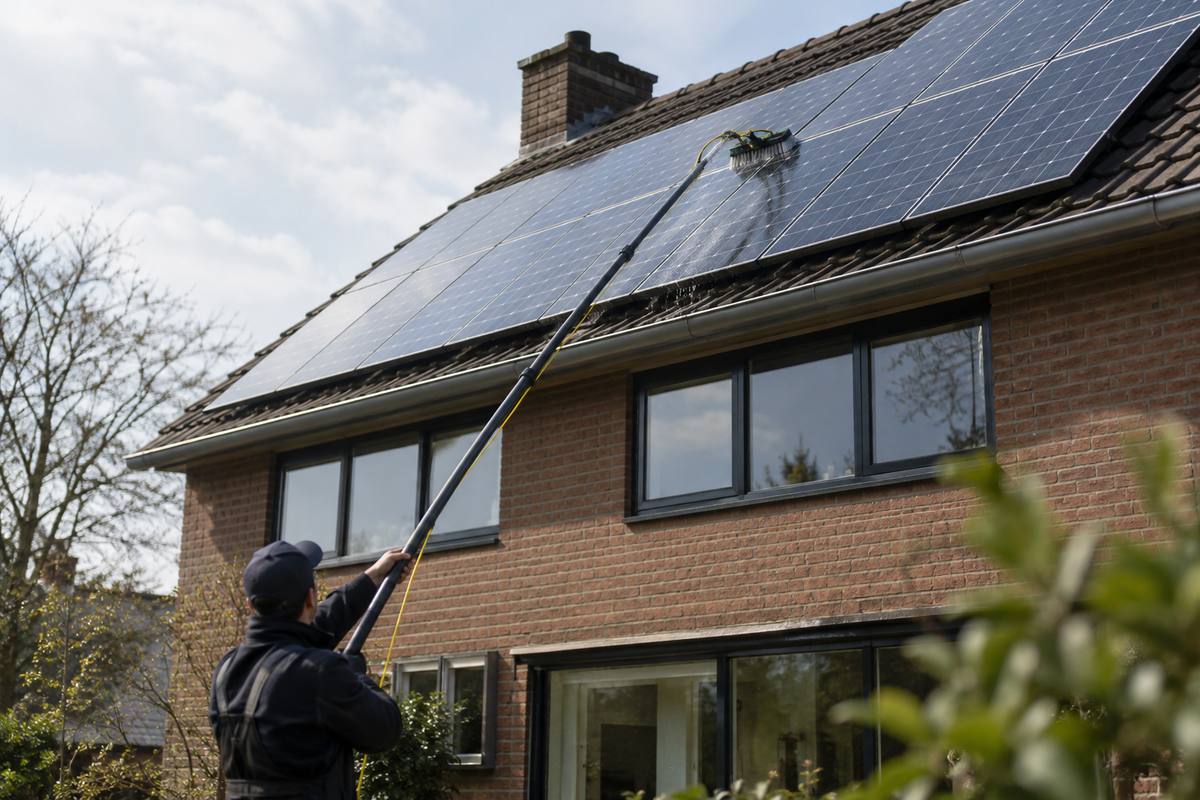
Solar panels need far less attention than most people expect. On a tilted roof in a rainy climate, regular rainfall does much of the solar panel cleaning for you, and there are no moving parts to wear out. What a system does need is someone keeping an eye on it: checking the monitoring, spotting a tripped inverter early, and dealing with birds, moss or heavy soiling when they appear.
This guide covers when panels genuinely need cleaning, how to do it without damaging anything, the checks worth doing yourself, and what professional servicing typically costs in the UK, Ireland and the US.
In short:
- In the UK and Ireland, rain keeps most tilted panels reasonably clean. Low-tilt arrays, homes near farms or trees, and dry US climates are the exceptions.
- Never use a pressure washer, abrasive pads or harsh detergents, and never walk on panels.
- Your monitoring app is the most useful maintenance tool you have. A sudden drop matters more than a dirty-looking panel.
- Inverters are the component most likely to need attention during a system's life.
Do solar panels need cleaning?
Usually not often. Light dust and pollen wash off in rain, and the output lost to a thin film of dirt on a steep, regularly rained-on roof tends to be small. Cleaning becomes worthwhile in specific situations:
- Low tilt or flat roofs. Water pools and leaves a line of grime along the bottom edge of each panel, which can shade the lowest row of cells.
- Bird droppings. A concentrated patch blocks light to individual cells and can cause hot spots if left for months.
- Trees, farms and roads. Sap, agricultural dust and traffic grime stick harder than ordinary dust.
- Moss and lichen. These grow along frames in damp, shaded spots.
- Dry climates. In parts of the western US, months without rain allow dust to build up steadily.
A good rule: look at the panels with binoculars once or twice a year and compare output with the same month last year. If both look normal, leave them alone.
How to clean solar panels safely
If cleaning is needed and the panels are reachable from the ground, you can do it yourself. Roof work is different: falls from height are a serious risk, so use a professional with the right access equipment.
- Check the manual first. Manufacturers specify approved cleaning methods, and ignoring them can affect your warranty.
- Pick a cool, dull moment. Early morning, evening or an overcast day avoids cold water hitting hot glass and stops streaks drying on.
- Use soft tools. A soft brush on a water-fed pole is ideal. Pure or deionised water dries without spots.
- Skip the chemicals. Plain water handles most dirt. If you need more, use only what the manufacturer allows.
- No pressure washers. High pressure can damage seals, edges and coatings.
- Stay off the panels. Walking or kneeling on modules can cause microcracks that are invisible at first but cut output over time.
Bird proofing
Pigeons like the sheltered gap under roof-mounted panels. Nests, droppings and noise follow, and birds can damage cables. The usual fix is a mesh skirt clipped around the array edge, which closes the gap without drilling into panels.
It is cheapest to fit at installation, while scaffolding or access equipment is already in place. Retrofitting usually needs the nest cleared and the area cleaned first. In some areas, nesting birds have legal protection during the breeding season, so a professional will advise on timing.
Inverter checks you can do yourself
The inverter converts the panels' DC output into AC for your home, and it is the part most likely to fail during the system's life. Once a month, take a quick look:
- Status light or display. Green or "normal" is good. Red, orange or an error code needs investigating.
- Ventilation. Keep vents clear of stored boxes, dust and cobwebs, especially in lofts and garages.
- Isolators and breakers. If the system is off, check whether a breaker on your consumer unit or fuse box has tripped. Reset once. If it trips again, call your installer.
Microinverters and power optimisers sit under the panels, so you rely on the monitoring app to check them. Our comparison of solar inverter types explains how each reports faults.
Using monitoring to spot faults
Compare like with like. Output naturally swings with the seasons, so check this month against the same month last year, or against the monthly figures in your installer's estimate. Our guide to how solar panels perform in winter shows what a normal seasonal curve looks like.
| What you see | Likely cause | What to do |
|---|---|---|
| Zero output on a bright day | Inverter fault or tripped breaker | Check the breaker, then call your installer |
| App shows no data | Wi-Fi or router change | Reconnect the inverter's communications |
| Gradual dip over months | Soiling, new shading, ageing | Inspect from the ground and compare with last year |
| One panel far below the others | Shading, damage or a failed optimiser | Ask for a panel-level inspection |
| Output capped flat at midday | Inverter clipping or an export limit | Normal in moderation; ask if it is frequent |
A lost Wi-Fi connection is the most common "fault" homeowners report. The system usually keeps generating, it just stops reporting.
Solar panel maintenance schedule and servicing cost
Professional prices vary with system size, roof height and access. The ranges below are indicative for a typical home in 2026.
| Task | Typical frequency | Indicative cost (UK / IE / US) |
|---|---|---|
| Visual check and monitoring review | Monthly, DIY | Free |
| Professional panel cleaning | Only when needed | £100–£250 / €120–€300 / $150–$400 |
| Health check and electrical inspection | Every few years | £100–£250 / €120–€300 / $150–$350 |
| Bird-proofing mesh, retrofitted | Once, if needed | £300–£600 / €350–€700 / higher in many US areas |
| String inverter replacement | Often once in 25 years | £800–£2,000 / €900–€2,200 / $1,500–$3,500 |
A health check typically covers a visual inspection of panels and fixings, cable and connector condition, inverter logs, isolator operation and electrical tests. Ask for a written report.
When to call a professional
Call your installer or a specialist straight away if you notice cracked glass, scorch or burn marks, water inside a panel, cables hanging loose after a storm, a burning smell near the inverter, or repeated breaker trips. Do not touch damaged equipment: panels generate voltage whenever light reaches them, even when the inverter is off.
For long-term issues such as falling output on an older system, see how long solar panels last, which covers degradation and warranty claims.
Finding someone to service your system
Your original installer is the natural first call, especially while the workmanship warranty is active. If that company has closed or no longer services domestic systems, you need a new provider.
On PVFirms you can search the installer directory or the consulting and services category, which includes operations and maintenance providers. The guide to solar O&M companies in Europe explains what specialist service firms offer. You can also browse the full solar company directory by country and region. Requesting quotes is free, and verification badges show which firms have had their registration and customer record checked.
FAQ
How often should solar panels be cleaned?
In the UK and Ireland, many tilted home systems need professional cleaning rarely, if ever. Low-tilt arrays, homes near trees or farms, and systems in dry US climates may benefit from a clean once or twice a year. Let monitoring data and a visual check guide you rather than a fixed schedule.
Can I clean solar panels with a hose?
Yes, a gentle hose spray from the ground is fine, ideally with a soft brush for stubborn patches. Avoid high-pressure nozzles and pressure washers. Clean when the panels are cool, and use pure or soft water if you can, because hard tap water may leave mineral spots as it dries.
Is it worth paying for solar panel cleaning?
Only when soiling is visible and your output has dropped compared with the same period last year. On a clean-looking roof with normal generation, a paid clean adds little. Be cautious of cold callers selling cleaning or "efficiency checks", and get a quote from a firm you have checked.
Does solar panel maintenance affect my warranty?
It can. Manufacturers usually set out approved cleaning methods, and damage from pressure washing, harsh chemicals or walking on panels may not be covered. Workmanship warranties may also expect reasonable care. Keep records of any servicing in case you need to make a claim.
Keep your system earning
Check your monitoring monthly, look at the panels twice a year and call a professional only when something looks wrong. When you need help, find installers and service providers near you on PVFirms and request free quotes.