How Long Do Solar Panels Last? Lifespan, Degradation and Warranties Explained
By PVFirms Editorial Team, Published on 2026-10-24 • 7 min read
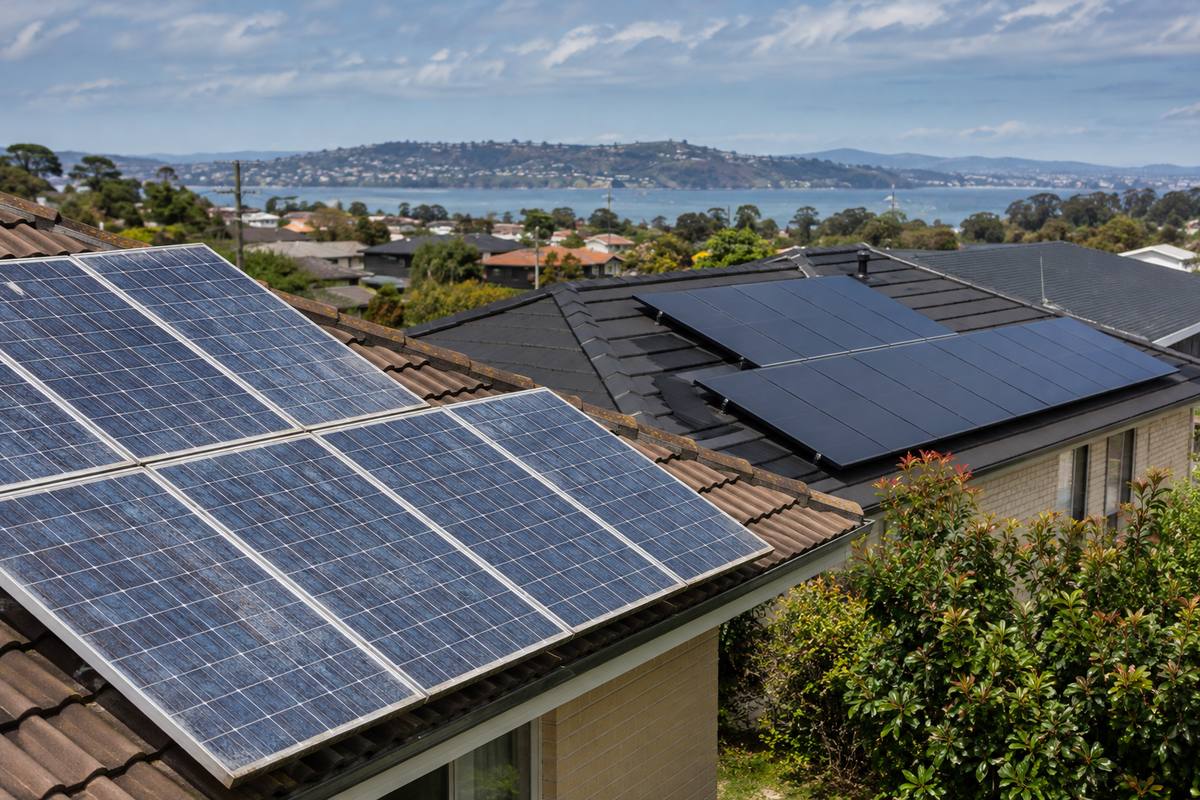
Quality solar panels typically last 25 to 30 years, and many keep producing useful power well beyond that. They rarely stop working on a set date. Instead, output declines slowly, often by less than half a percent a year for modern modules, until the system is no longer worth keeping or the roof beneath it needs replacing.
So how long do solar panels last in practice? Long enough that the panels usually outlive at least one inverter, possibly a battery and sometimes the installer who fitted them. This guide explains what "lifespan" really means, how degradation works, how to read a solar panel warranty, and what happens at end of life.
In short:
- Expect 25–30+ years of useful life from quality panels. Inverters typically last 10–15 years.
- Modern panels typically lose about 0.4–0.5% of output a year, and n-type modules often less.
- A performance warranty guarantees a minimum output after 25–30 years. A product warranty covers defects. They are not the same thing.
- In the UK and EU, panels fall under electronic waste rules, so producers fund collection and recycling.
What solar panel lifespan really means
There are three ways to define how long a panel lasts:
- Warranty life: the period the manufacturer guarantees output, usually 25 or 30 years.
- Economic life: the point at which the system no longer earns enough to justify keeping it, or a re-roof makes removal sensible.
- Physical life: how long the panel keeps generating at all, which can be considerably longer.
A panel that reaches the end of its warranty still works. It just produces somewhat less than when new, and the manufacturer's promise has expired.
Solar panel degradation rate: how output declines
Degradation happens in two stages. In the first year, panels lose a little more output as the cells stabilise in sunlight. After that, the decline is slow and roughly linear.
Typical annual rates for modern monocrystalline panels sit around 0.4–0.5%. N-type cells, such as TOPCon and heterojunction, are generally less prone to light-induced losses and often carry warranties based on lower rates. Our comparison of TOPCon, HJT and perovskite cells explains why.
The table shows two illustrative scenarios, not test results:
| Year | Typical p-type (2% first year, then 0.5%/yr) | Typical n-type (1% first year, then 0.4%/yr) |
|---|---|---|
| 1 | 98.0% | 99.0% |
| 10 | 93.5% | 95.4% |
| 20 | 88.5% | 91.4% |
| 25 | 86.0% | 89.4% |
| 30 | 83.5% | 87.4% |
In practical terms, a system that generates 3,600 kWh a year when new would still produce roughly 3,100–3,200 kWh in year 25 under these assumptions. That is why payback calculations normally assume a small annual decline rather than a cliff edge.
What shortens a panel's life
Most panels age gracefully. Problems usually trace back to manufacturing quality, handling or installation:
- Microcracks from rough handling, walking on panels or extreme loads. They can grow over time and reduce output.
- Hot spots where a damaged or shaded cell overheats, sometimes leaving visible browning.
- Potential-induced degradation (PID), a voltage-related loss that good modules and system design largely prevent.
- Delamination or moisture ingress, where the layers separate and water gets in, usually a manufacturing defect.
- Junction box and connector faults, including mismatched connector brands, which can overheat.
- Storm and impact damage, usually a home insurance matter rather than a warranty one.
Regular monitoring and a sensible maintenance routine catch most of these early. Our solar panel cleaning and maintenance guide explains what to look for.
Solar panel warranty: product vs performance
A solar panel warranty usually comes in two parts, and installers have a third.
| Warranty | Typical length in 2026 | What it covers | Common exclusions |
|---|---|---|---|
| Product (manufacturer) | 12–30 years, often 25 on premium modules | Defects in materials and workmanship | Installation errors, impact, unapproved cleaning |
| Performance (manufacturer) | 25–30 years | A minimum percentage of rated output each year | Shading, soiling, system design |
| Workmanship (installer) | Often 2–10 years | Installation quality, leaks, fixings | Hardware defects covered by manufacturers |
Lengths are typical ranges and vary by brand and market. Three points matter more than the headline number:
- The warranty is only as good as the company behind it. A 30-year promise from a manufacturer that leaves the market is hard to enforce. The PVFirms explainer on Tier-1 solar panels covers what bankability lists do and do not tell you.
- Labour is often excluded. Many product warranties replace the panel but not the cost of scaffolding and fitting. Check before you buy.
- Installer warranties need protection. In the UK, an insurance-backed workmanship warranty covers you if the installer stops trading.
The rest of the system ages faster
Panels are the longest-lived part of a solar installation. Plan for the others:
- String and hybrid inverters: typically 10–15 years. Budget for one replacement over the system's life.
- Microinverters and optimisers: often warranted for 20–25 years, though some units can fail earlier.
- Batteries: commonly warranted for around 10 years or a set number of cycles, with gradual capacity loss.
- Mounting rails and cabling: designed to last as long as the panels when installed correctly.
Our comparison of solar inverter types covers inverter warranties in more detail.
Plan around your roof
If your roof covering is likely to need work within the next ten years, do it before installing panels. Removing and refitting an array later means extra labour and access costs, and may need a fresh electrical check.
End of life: reuse and recycling
When panels come off a roof, they still have value. Modules with plenty of output left can be tested and resold, and our guide to used solar panels explains how second-hand modules are checked and traded.
For panels that are genuinely finished, recycling recovers glass, aluminium, copper and silicon. In the UK, solar panels have been covered by the WEEE regulations since 2014, and across the EU, including Ireland, they fall under the WEEE Directive. In both cases producers must finance collection and treatment, so you should not pay for a manufacturer's recycling obligation. In the US, there is no single federal take-back scheme and rules vary by state, so ask your installer what happens to removed panels.
Choosing panels built to last
Durability starts with the manufacturer. Look for clear warranty documents, an established presence in your market and independent test certifications. The PVFirms guide to choosing a solar panel manufacturer sets out the checks, and you can browse the manufacturer category to see where companies are based and how their profiles are verified.
Frequently asked questions
Do solar panels stop working after 25 years?
No. Twenty-five years is a common warranty length, not an expiry date. Panels at that age typically still produce most of their original output, and many continue for years longer. The decision to replace them usually comes down to economics, a re-roof or the appeal of newer, more efficient modules.
What is a good degradation rate for solar panels?
For modern panels, a warranted rate of around 0.4–0.5% a year after the first year is typical, and many n-type modules are warranted at around 0.4% or lower. Compare the warranted output at year 25 or 30 across quotes, as that single figure captures both first-year and annual losses.
Is it worth replacing old solar panels with new ones?
Only if the old ones have a fault or the roof needs work. Replacing working panels purely for higher efficiency rarely pays back, because existing panels already cover your roof and still produce. Repowering makes more sense when an array is very old, damaged, or when a re-roof forces removal anyway.
Does a solar panel warranty transfer when I sell my house?
Manufacturer warranties usually stay with the panels and pass to the new owner, though some require registration or notification. Insurance-backed workmanship warranties in the UK are often transferable too. Keep the warranty documents, MCS certificate and installation records together for your buyer's solicitor.
Getting 30 years out of your system
Choose panels from a manufacturer with a solid track record, insist on clear product, performance and workmanship warranties, and budget for an inverter replacement. Start by comparing solar panel manufacturers on PVFirms, then ask installers which brands they fit and why.