How Much Do Solar Panels Cost in the UK in 2026? Prices, Payback and How to Pay Less
By PVFirms Editorial Team, Published on 2026-10-24 • 7 min read
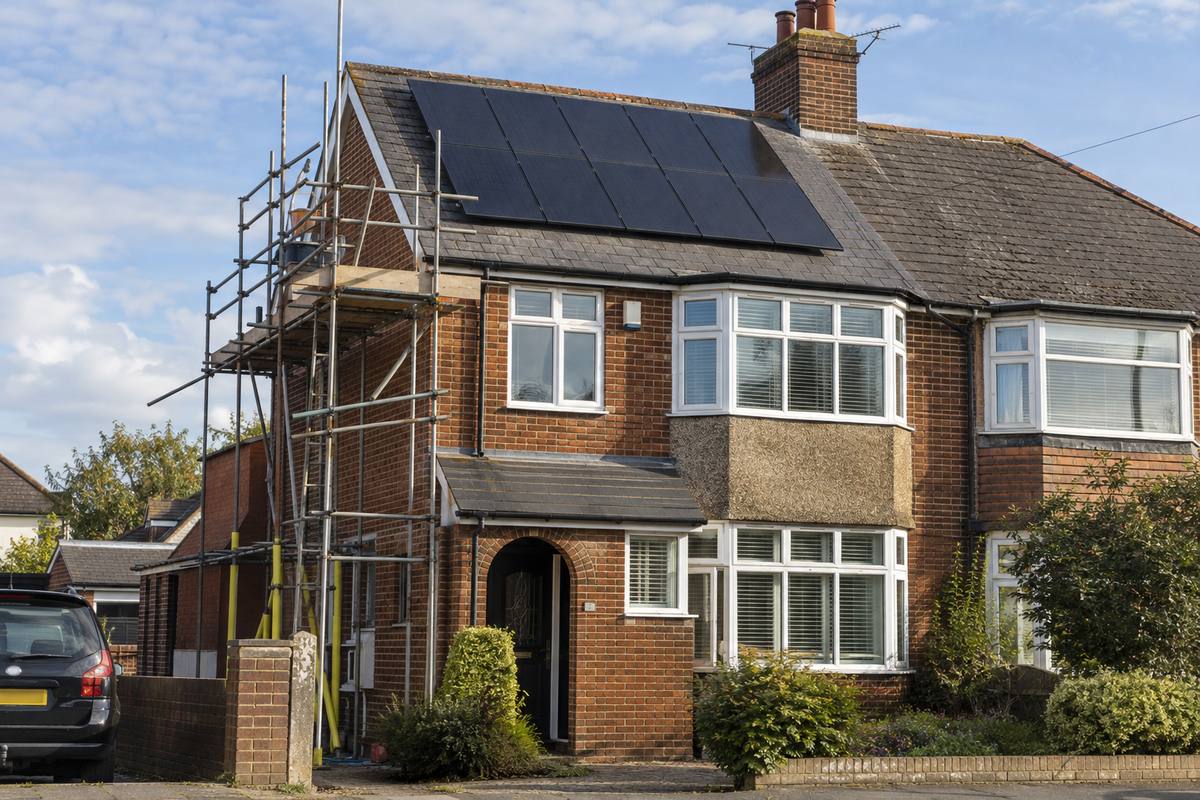
If you are wondering how much solar panels cost in the UK, the short answer is that most homes pay somewhere between £5,000 and £10,000 for a complete, installed system without a battery. Where you land in that range depends on system size, roof type, access and the hardware you choose. Add a home battery and the total typically rises by a few thousand pounds.
This guide breaks the solar panels cost UK homeowners face into its real components, shows indicative 2026 prices by system size, and explains how to compare quotes so you pay a fair price for a well-designed system.
In short:
- A typical 4 kW domestic system costs roughly £5,500–£7,500 installed in 2026 (indicative).
- Scaffolding, roof complexity and inverter choice explain most of the difference between quotes.
- Residential solar and batteries are zero-rated for VAT until 31 March 2027.
- Getting three comparable quotes from MCS-certified installers is the most reliable way to avoid overpaying.
Solar panels cost UK: indicative 2026 prices by system size
Prices below are indicative ranges for a standard pitched roof with straightforward access. They include panels, inverter, mounting, scaffolding, labour, commissioning and MCS certification, but not a battery.
| System size | Typical panels (430 W) | Roof space needed | Indicative installed price | Estimated yearly generation* |
|---|---|---|---|---|
| 3 kW | 7 | ~14 m² | £4,500 – £6,000 | 2,500 – 3,000 kWh |
| 4 kW | 9–10 | ~19 m² | £5,500 – £7,500 | 3,400 – 4,000 kWh |
| 5 kW | 12 | ~23 m² | £6,500 – £8,500 | 4,200 – 5,000 kWh |
| 6 kW | 14 | ~27 m² | £7,500 – £10,000 | 5,000 – 6,000 kWh |
*Based on a typical UK yield of about 850–1,000 kWh per kW installed per year, depending on location, orientation and shading. Southern England sits at the higher end, Scotland at the lower end.
On a price per kW basis, larger systems are cheaper because fixed costs such as scaffolding, design and certification are spread over more panels. That is why a 6 kW system rarely costs twice as much as a 3 kW one.
What actually drives your solar panel installation cost
Two quotes for "a 4 kW system" can differ by £2,000 or more. Usually the difference is explained by a handful of factors.
Scaffolding and access
Scaffolding is often £600–£1,200 of the bill. Three-storey houses, conservatories in the way, or a roof that needs scaffolding on two elevations all push this up. Some installers quote it separately, so check it is included.
Roof type and condition
Concrete tiles and slate are standard. Clay tiles, plain tiles and flat roofs need different mounting kits and more labour. If your roof needs repairs, do them first. Removing and refitting panels later is expensive.
Inverter choice
A single string inverter is the cheapest option. Microinverters or power optimisers add cost but help on roofs with partial shading or several orientations. A hybrid inverter costs a little more upfront but makes adding a battery later simpler and cheaper. Our guide to solar inverter types explains when each makes sense.
Panel quality and warranties
Premium n-type panels with 25–30 year product warranties cost more per watt than entry-level modules. The difference on a 4 kW system is often only a few hundred pounds, but it affects long-term output. PVFirms' explainer on Tier-1 solar panels is a good primer on what a manufacturer label does and does not tell you.
Extras
Bird-proofing mesh (around £300–£600), an EV charger, monitoring upgrades and electrical work such as a consumer unit replacement all appear as extras. None of them are bad. Just make sure you know which ones you are paying for.
How much does a solar battery add?
A battery lets you store daytime surplus for the evening instead of exporting it. As an indicative guide for 2026:
- 5 kWh battery: roughly £2,500–£4,500 when installed with the panels.
- 10 kWh battery: roughly £4,500–£7,500.
- Retrofitting a battery later: usually costs more because of a separate visit and, without a hybrid inverter, extra hardware.
Whether a battery pays off depends on how much power you use in the evening and on your tariff. Time-of-use tariffs can improve the numbers because you can also charge cheaply overnight. For a deeper look, read our guide to solar battery storage in the UK.
VAT, grants and export payments
Three things reduce the effective cost of a system in the UK.
0% VAT. Solar panels and batteries installed in homes are zero-rated for VAT in Great Britain until 31 March 2027. Your quote should not include VAT on these items.
Export payments. Under the Smart Export Guarantee, larger electricity suppliers must offer a tariff for the electricity you send to the grid. You need an MCS certificate and an export-capable smart meter. Rates differ widely between suppliers, so compare them. Our Smart Export Guarantee explainer shows how.
Grants. Most households pay for solar themselves, but some low-income or energy-inefficient homes may qualify for schemes delivered through suppliers or local councils. The PVFirms UK solar incentives guide summarises the mechanisms and links to official sources, where you should always confirm current terms.
Is it worth it? A simple payback example
Payback depends on your usage, roof and tariffs. Here is an illustrative example, not a forecast:
- 4 kW system at £6,500, generating 3,600 kWh a year.
- Half the generation is used in the home, avoiding electricity you would otherwise buy.
- The other half is exported under an SEG tariff.
If the electricity you avoid buying is worth around 25p per kWh and exports earn around 12p per kWh, the yearly benefit is about £450 + £215 = £665. Simple payback is then just under 10 years, on panels that typically last 25–30 years. Use your own unit rate and export tariff to redo the maths. If you use more power during the day, payback gets shorter.
For a fuller method, see are solar panels worth it in the UK.
How to compare quotes and find a fair price
The best protection against overpaying is a like-for-like comparison of at least three quotes. For each one, check:
- Exact panel and inverter models. Not just "400 W panels".
- Estimated annual generation calculated to MCS standards, with the shading assumptions stated.
- What is included: scaffolding, bird mesh, monitoring, removal of waste, DNO notification.
- Warranties: panel product and performance, inverter, workmanship. Is the workmanship warranty insurance-backed?
- Payment terms. Be cautious of large upfront deposits.
- Certification. MCS certification and membership of a consumer code (such as RECC or HIES) protect you if something goes wrong.
You can find installers on PVFirms by browsing solar companies in the United Kingdom or filtering the installer directory by region. Profiles show each company's verification tier. A Verified badge means PVFirms has checked the business registration and VAT details against official registers and confirmed at least one real customer. Requesting a quote through a profile is free. For more vetting tips, read how to compare solar quotes.
Frequently asked questions
How much does a 4 kW solar system cost in the UK?
In 2026, a typical 4 kW system on a standard pitched roof costs roughly £5,500–£7,500 installed, including scaffolding and MCS certification but excluding a battery. Complex roofs, microinverters or premium panels can push the price higher, while simple installs in competitive areas can come in lower.
Are solar panel prices in the UK going down?
Panel prices fell sharply between 2023 and 2025 because of global oversupply. Installed prices fell less, because labour, scaffolding and certification make up a large share of the cost. In 2026 the bigger savings usually come from choosing the right system size and comparing installers rather than waiting for hardware to get cheaper.
Do I pay VAT on solar panels?
No, not for homes in Great Britain at the moment. Solar panels and batteries installed in residential properties are zero-rated for VAT until 31 March 2027. If a quote adds 20% VAT to the panels or battery, ask the installer to explain why.
How long do solar panels take to pay for themselves?
Many UK homes see simple payback in roughly 8–14 years. The range depends on system cost, how much electricity you use during daylight, your unit rate and your export tariff. Panels usually last 25–30 years, so a well-sized system typically generates savings long after it has paid for itself.
Is it cheaper to add a battery later?
Usually not. Installing a battery at the same time as the panels saves a second visit and, with a hybrid inverter, avoids extra hardware. If budget is tight, ask for a hybrid inverter now so a battery can be added later at lower cost.
Your next step
Start by checking your annual electricity use, then ask three MCS-certified installers for quotes on the same system size. Browse verified solar installers in the UK on PVFirms to build your shortlist and request quotes for free.