Solar PPA Explained: How Corporate Power Purchase Agreements Work in 2026
By PVFirms Editorial Team, Published on 2026-10-24 • 7 min read
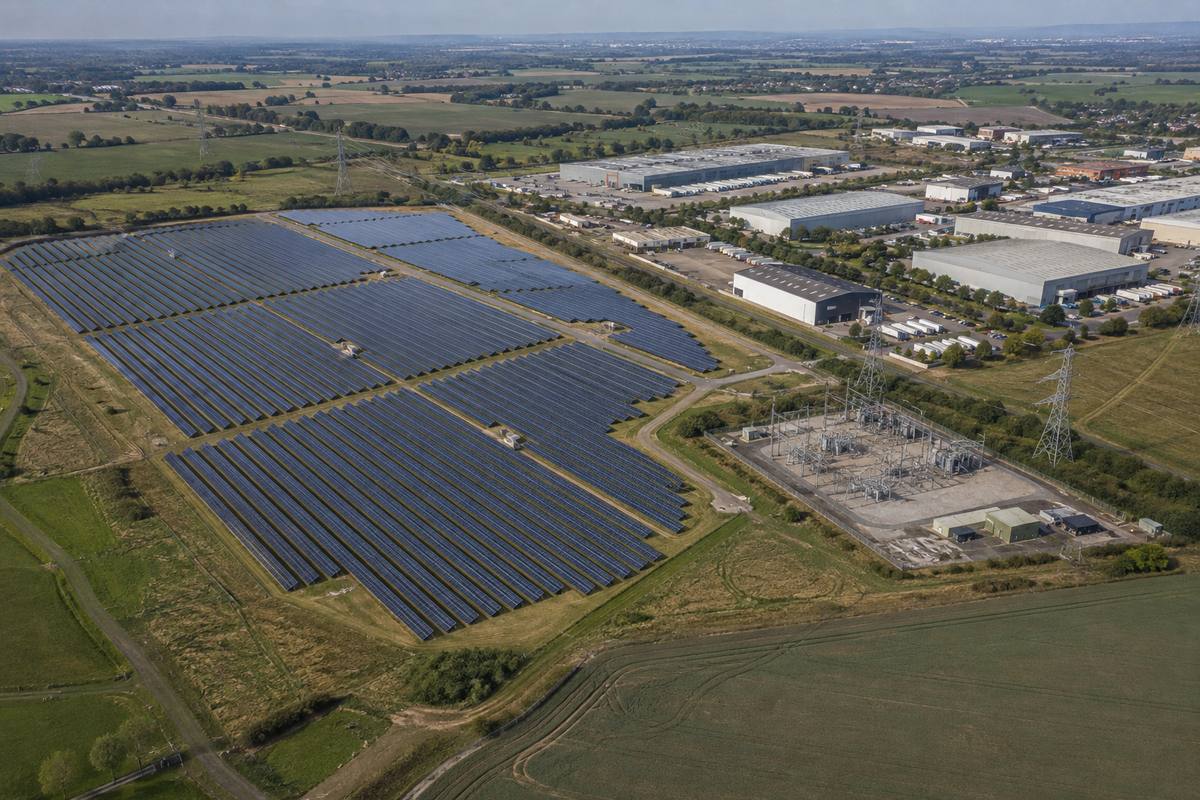
A solar PPA is a long-term contract under which a business buys electricity, or its financial equivalent, from a specific solar plant at a pre-agreed price. The buyer gets price certainty and credible renewable sourcing. The seller, usually an independent power producer (IPP) or developer, gets the predictable revenue that lenders need before they finance construction.
Corporate PPAs are no longer reserved for technology giants. Manufacturers, retailers, food processors and data-centre operators across Europe and the UK now use them. The structures vary widely, and most of the risk sits in clauses that look technical on first reading. This guide explains the main types, how prices and volumes are set, and what to negotiate.
In short:
- An on-site PPA puts the plant at your premises; an off-site PPA links you to a remote plant through the grid or a financial contract.
- Physical PPAs deliver power, in Europe usually sleeved through your supplier. Virtual PPAs settle the gap between a strike price and the market price.
- Pay-as-produced volumes leave solar's profile risk with the buyer; baseload volumes move it to the seller, at a price.
- Midday price cannibalisation and negative-price hours are now central negotiating points.
Physical vs virtual PPA and the other main structures
| Structure | How it works | Suits | Watch out for |
|---|---|---|---|
| On-site PPA | Third party builds and runs a plant on your roof or land; you buy the output behind the meter | One site with strong daytime load | Volume capped by site size and load |
| Near-site / private wire | Plant on adjacent land, linked by a direct cable | Industrial sites with spare land nearby | Licensing and private-wire rules vary by country |
| Off-site physical (sleeved) | Plant exports to the grid; your supplier delivers its output to your meters and balances it | Large or multi-site consumers in one market | Sleeving and balancing fees |
| Virtual (financial) | Generator sells into the market; you settle the difference against the strike price and receive certificates | Multinationals, multi-country portfolios | Derivative accounting, basis risk |
In every structure, the energy attribute certificates must be allocated explicitly: Guarantees of Origin in the EU, REGOs in Great Britain, RECs in North America. Without them, you cannot report the power as renewable under market-based accounting.
How power purchase agreement solar pricing works
The price itself
- Fixed: one €/MWh or £/MWh for the full term.
- Fixed with escalation: indexed annually to inflation or a fixed percentage.
- Floating with a collar: a discount to market, bounded by a floor and a cap.
- Hybrid: a share at fixed price, the rest exposed to market.
Corporate PPA terms commonly run 10 to 15 years, sometimes longer. The seller needs enough tenor to support its debt; the buyer must be comfortable forecasting its demand that far ahead.
The volume shape
- Pay-as-produced: you take whatever the plant generates, hour by hour. It is the cheapest structure, but you buy the residual from your supplier and absorb the mismatch.
- Baseload or shaped: the seller delivers a fixed block in every hour and firms it with other assets, storage or market purchases. You pay more for that service.
- Portfolio blends: solar combined with wind or storage to flatten the profile. Our battery energy storage guide explains how co-located storage reshapes output.
An illustrative case: a manufacturer using 40 GWh a year signs a pay-as-produced deal for a 20 MWp plant in southern Europe. At an assumed yield of 1,200 kWh per kWp, the plant produces about 24 GWh, roughly 60% of annual demand. On a June midday it delivers more than the factory uses; at night it delivers nothing. The contract covers volume, not timing.
The risks that decide whether a corporate PPA works
Cannibalisation. When many solar plants generate at once, midday wholesale prices fall. Solar's capture price, the market price weighted by its production profile, drifts below the baseload average. In a virtual PPA, that means more frequent top-up payments to the generator. In a fixed-price physical deal, the PPA can look expensive against spot at noon.
Negative prices. Negative wholesale hours have become more common in several European markets during sunny, low-demand periods. Agree who pays in those hours, whether the plant must curtail, and whether curtailed volumes count as deemed delivery.
Volume and performance. Underperformance hurts both sides. Ask for availability commitments and check that the seller's yield forecast is backed by an independent assessment.
Credit. Sellers want investment-grade buyers or security such as parent guarantees. Buyers want a creditworthy seller and long-stop dates in case the plant is delayed.
Basis and change in law. Virtual PPAs settle at a reference price that may differ from the price you pay for power, especially across bidding zones. Change-in-law clauses decide who absorbs new levies or market rules.
Accounting. Virtual PPAs, and some physical ones, can fall to be treated as derivatives under IFRS 9. The IASB has amended its guidance for nature-dependent electricity contracts, so involve your auditors before term sheets are signed.
Where IPPs and developers fit
IPPs own and operate plants for the long term, sign PPAs as sellers and carry the project finance. Developers often secure a PPA during development to make a project financeable, then sell it to an IPP or fund. In that case, check the assignment provisions. Utilities act as intermediaries, sleeving physical deals and aggregating smaller buyers into shared contracts. If you are evaluating projects rather than offtake, our guide to ready-to-build solar projects for sale covers how a signed PPA affects valuation.
Readiness checklist before you approach the market
- Twelve months or more of hourly consumption data per site.
- Board approval of the tenor and the maximum volume as a share of demand.
- Treasury view on credit support and accounting treatment.
- Clear sustainability criteria: additionality, certificate matching and any hourly-matching ambitions.
- Confirmation that your supply contract allows sleeving.
- A team covering procurement, legal, finance and sustainability, plus specialist advisers.
Sites with large daytime loads should model an on-site PPA or owned commercial solar alongside off-site options.
Finding solar PPA partners on PVFirms
As of October 2026, PVFirms lists 134 independent power producers, according to its solar company statistics. Start with the IPP directory for asset owners able to sign as sellers. Then check the EPC and project developer category for developers with pipelines who may offer PPAs on projects still in development, or on-site solutions. Filter by country and verification tier, and contact companies directly from their profiles. The PVFirms glossary explains terms such as sleeving and capture price for colleagues new to energy procurement.
Frequently asked questions
What is the difference between a physical and a virtual PPA?
In a physical PPA, electricity from the plant is delivered to your sites, normally through your supplier. In a virtual PPA, no power changes hands: the generator sells into the market, and you and the generator settle the difference between the market price and the agreed strike price. Both can transfer certificates.
How long does a corporate solar PPA last?
Commonly 10 to 15 years, and sometimes longer for new-build projects where the seller needs revenue certainty to raise debt. Shorter deals exist for operating plants. Longer tenors usually achieve lower prices but increase the risk that your demand, sites or business model change during the contract.
Can smaller companies sign a solar PPA?
Yes, through other routes. Off-site deals generally need large, stable volumes and strong credit, so smaller buyers tend to use aggregated or consortium PPAs arranged by utilities or advisers, or an on-site PPA where a third party funds a system on their roof. Both avoid the minimum volumes of a standalone deal.
Does a PPA guarantee cheaper electricity?
No. It fixes or bounds the price for the contracted volume. If market prices fall below your strike, you pay more than spot for that volume; if they rise, you save. Treat a PPA as a hedge and a sourcing tool, and judge it against your risk appetite rather than a short-term price forecast.
Talk to asset owners
Prepare your load data and internal approvals, then open conversations with generators in the IPP directory. Shortlisting two or three counterparties early gives you real price discovery before advisers start drafting.