Solar Panels and Heat Pump: How Well Do They Work Together in the UK and Ireland?
By PVFirms Editorial Team, Published on 2026-10-24 • 7 min read
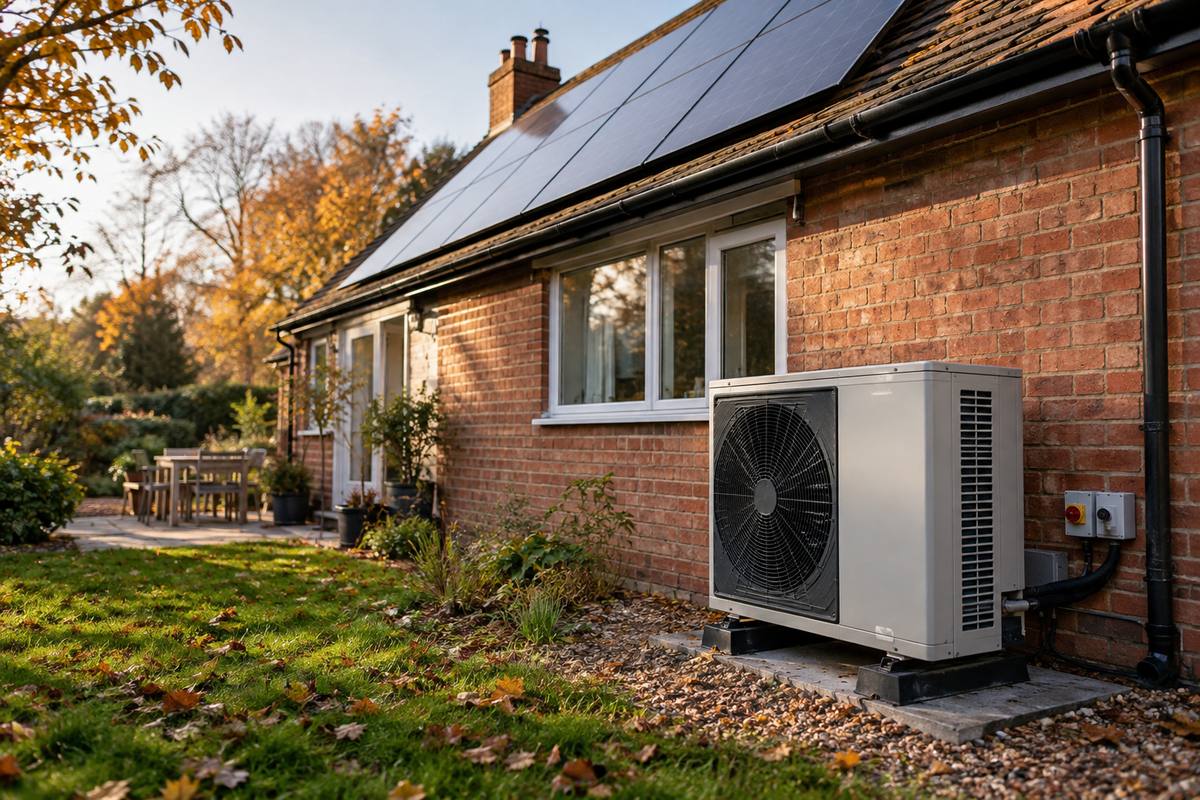
Pairing solar panels and a heat pump is a popular upgrade for UK and Irish homes leaving gas or oil. It makes sense, but not quite for the reason many expect. Your panels will not run the heat pump on a cold January evening. They do cover much of your summer hot water, some spring and autumn heating, and part of the extra electricity your home now uses.
This guide covers seasonal fit, sizing, the Boiler Upgrade Scheme, smart controls and batteries.
In short:
- Solar PV can cover most summer hot water demand, a fair share in spring and autumn, and very little in midwinter.
- Size the heat pump to your home's heat loss first, then size the solar to your roof and your new, higher electricity use.
- The Boiler Upgrade Scheme helps with heat pumps in England and Wales but does not pay for solar panels. Scotland and Ireland have their own schemes.
- Smart controls and the right tariff usually do more for your bills than squeezing on extra panels.
Why the seasons decide what a heat pump with solar PV can cover
A heat pump uses most of its electricity between November and March. Solar panels produce most of theirs between April and September. In the UK and Ireland, a south-facing array typically generates several times more in June than in December.
It helps to think of the year in three blocks:
| Season | Heat pump demand | Typical solar output | Share PV can usually cover directly |
|---|---|---|---|
| Summer (May–Aug) | Low: hot water only | High | Most of the hot water load, if heating is timed to daylight |
| Spring and autumn (Mar–Apr, Sep–Oct) | Moderate: morning and evening heating | Moderate | A meaningful share, especially midday runs |
| Winter (Nov–Feb) | High: space heating for long periods | Low | A small share; the grid supplies most of it |
These are typical patterns, not guarantees; see our guide to solar panels in winter for cold-month output. Over a year, solar typically covers well under half of a heat pump's consumption directly, but a larger share of the total bill, because it also runs lights and appliances.
Sizing an air source heat pump and solar array together
Start with the heat pump
An installer should size an air source heat pump from a room-by-room heat loss calculation, not from your old boiler's output. MCS-certified installers follow a standard design method for this.
A well-designed system typically delivers around three units of heat per unit of electricity over a year. This seasonal coefficient of performance (SCOP) typically ranges from 2.5 to 4, and lower flow temperatures and good insulation push it up.
Then size the solar
Add the heat pump's expected consumption to your current use. An illustrative example:
- Existing household use: 3,000 kWh a year.
- Annual heat demand of 10,000 kWh, met by a heat pump with a SCOP of 3.3: about 3,000 kWh of electricity.
- New total: roughly 6,000 kWh a year.
A 4–6 kW array would typically generate around 3,400–6,000 kWh a year in the UK. Because the heat pump load falls mostly in winter, this household would still import plenty in December and export in July. Most homes run out of good roof space before reaching "too much" solar. For a full method, see how many solar panels you need.
Larger systems in Great Britain may need a G99 application to the network operator, which can add weeks, so raise it at survey stage.
Boiler Upgrade Scheme and solar: what is and is not covered
The Boiler Upgrade Scheme (BUS) is the main government support for heat pumps in England and Wales. The mechanism:
- You choose an MCS-certified installer registered for the scheme.
- The installer applies on your behalf and deducts the grant from your quote.
- Ofgem administers the scheme and checks eligibility, which typically includes a valid Energy Performance Certificate.
- The grant is paid to the installer once the work is complete.
BUS does not fund solar panels or batteries. Grant levels and rules have changed before, so check current terms with Ofgem. In Great Britain, domestic heat pumps, solar panels and batteries are currently zero-rated for VAT until 31 March 2027.
Scotland runs its own grant and loan offer through Home Energy Scotland, and BUS does not apply in Northern Ireland. In Ireland, SEAI offers separate heat pump and solar PV grants, with a technical assessment required for the former. The PVFirms UK solar incentives guide and Irish incentives guide summarise each mechanism, and solar panel grants in the UK covers solar-specific schemes.
Smart controls: moving heat into sunny hours
Left alone, a heat pump runs whenever the house calls for heat. A few changes help it use more solar:
- Heat the cylinder at midday, when output peaks for much of the year.
- Pre-heat on sunny days. Many heat pumps and smart thermostats can raise the setpoint slightly when there is surplus.
- Use an energy manager. Some inverters can signal the heat pump to run when export rises. Check compatibility first.
- Treat immersion diverters with care. A diverter turns one unit of electricity into one unit of heat; the heat pump turns it into roughly three. Use a diverter for spare summer output, not as the main hot water source.
Several suppliers also offer time-of-use or heat pump tariffs with cheaper hours. Combined with the Smart Export Guarantee, you have three levers: use solar directly, run on cheap hours, export the rest.
Should you add a battery?
A battery is optional. From spring to autumn it stores midday surplus for evening heating; in winter it mostly charges on a cheap overnight rate to cover the evening peak. A running heat pump can draw a couple of kilowatts or more, so check the battery's continuous output, not just its capacity. Our guide to solar battery storage in the UK covers costs and payback.
Finding one installer for solar panels and a heat pump
One company for both systems means one survey, one electrical design and controls set up to work together. Fewer firms are equally strong in both trades, so check each credential:
- MCS certification for both heat pumps and solar PV. These are separate certifications.
- Membership of a consumer code such as RECC or HIES.
- A written heat loss calculation and an MCS-standard generation estimate.
- Clarity on controls, tariffs and who handles the BUS or SEAI paperwork.
- Separate workmanship warranties for each system.
On PVFirms you can filter the installer directory by region and browse solar companies in Ireland. Profiles show listed services and verification tier, so you can shortlist firms that handle both technologies and request quotes for free.
Frequently asked questions
Can solar panels run a heat pump on their own?
Not all year. In summer, a typical domestic array easily covers daytime hot water. In winter, when heating demand peaks and days are short, solar covers only a small part of the heat pump's use and the grid supplies the rest. A battery can stretch solar into the evening but cannot close the seasonal gap.
Does the Boiler Upgrade Scheme cover solar panels?
No. The scheme supports heat pumps, and biomass boilers in limited cases, in England and Wales. Solar panels and batteries are not eligible. You can still install solar at the same time and benefit from the current VAT relief and export payments. Confirm eligibility on the Ofgem website before committing, because the rules have been revised in the past.
Should I install solar or the heat pump first?
Installing both together saves a survey and lets one designer plan the electrics and controls once. If you must stage the work, choose a hybrid inverter when you fit solar and leave spare capacity on the consumer unit, so a heat pump and battery can follow without rework.
How many solar panels do I need for a heat pump?
There is no fixed number, because heat pump demand peaks in winter. Add the heat pump's expected annual use, typically 2,500–4,500 kWh for an average house, to your existing consumption, then fit as much well-oriented panel area as roof and budget allow. Many homes land between 4 and 6 kW.
Do I need a hot water cylinder with a heat pump?
Usually yes, if you currently have a combi boiler. Most heat pumps heat a stored cylinder rather than delivering instant hot water, so plan space for one. The upside is that the cylinder works as a heat battery you can fill with solar power in the middle of the day.
Plan your heat pump and solar upgrade
Start with a heat loss survey so you know how much electricity the heat pump will need, then design the solar around it. Browse verified installers in the UK on PVFirms to find firms certified for both, and request quotes for free.